

If there is a crisis – do you know where your people are?
Imagine the situation: An event (terrorist attack, industrial accident, public transportation accident) of some proportion happens. Many people are hurt, lots of rumors abound, emergency services are responding. Almost immediately, the question arises: Are any of my employees affected by this – and do they need help?
At present, most organizations locate their employees by calling them or sending emails. This is slow and ineffective – when Norway was hit by a terrorist bomb in the Oslo city centre in 2011 during the summer holiday, it took one of the large newspapers more than two days of frantic telephoning to find all their employees. Most of the employees were, of course, just fine, but the company still had to locate them all. In such a situation, knowing who is not in danger quickly is very important, because it lets you concentrate resources on those who need help.
Smarthelp Decision Support, the emergency service communication platform, allows an organization to quickly – within minutes – determine where its employees are and whether they need help. Smarthelp does this while maintaining privacy of the individual employee.
Most large organizations have a system where employees register where they travel on business. For this service to work, the employee has to remember to update it, though for some companies, this happens automatically if they purchase their tickets through a specific travel agency. While this may help, people travel for pleasure, deviate from their itineraries, forget to register their travels, and purchase their tickets from the cheapest, rather than the official source. Consequently, nobody knows where they really are.
SmartHelp Decision Support (see picture) allows the company to set up a geographical area surrounding the event, and contact all their employees (based on lists of telephone numbers) to determine whether they are inside this area or not.

Here is another example: You are responsible for security in a large company facility – say, an office building. The company receives a bomb threat which necessitates evacuating the building with thousands of employees. If the employees have SmartHelp on their phones, you can communicate with them all, and determine whether they (or at least their smartphones have left the building (limited by GPS accuracy). You can define a rallying point or area and get an automatic message as soon as someone enters the area, allowing you to quickly determine who is not accounted for. (At this point, GPS location – which we use – does not allow precise location inside a building, but that could change as WiFi locationing services get better.)
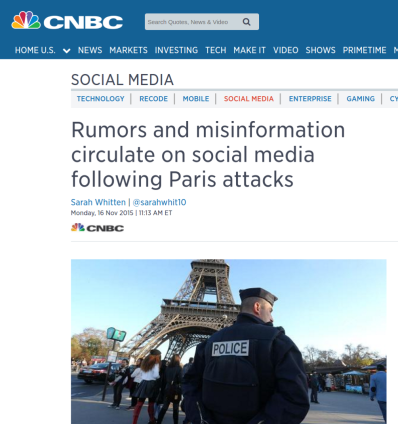 Another advantage is information: In the November 2015 terrorist attack in Paris happened, there where (as is usual) lots of rumors circulating in the hundreds of thousands of Twitter messages and other social channels. With SmartHelp, the authorities would have been able to send targeted messages to specific areas, conveying a precise and autorative message across a cacophony of noise and misinformation.
SmartHelp works anywhere in the world where there is mobile reception (I have used it to signal my position to my host in Shanghai, for instance.) Privacy is handled through an ingenious cryptographic architecture that is secure and fast – the platform is certified for the medical information under the Norwegian data privacy laws, among the strictest in the world.
If you want more information, please contact me or Fredrik Øvergård, CEO of SmartHelp.
(I am on the board of Råd AS, a company that has developed the platform SmartHelp for Norwegian emergency services, allowing shared situational awareness, communication and privacy. The company is now seeking customers and collaborators outside this market.)
Smarthelp is a platform technology consisting of, at present, three elements: Smarthelp Rescue, an app for iPhone and Android that allows users to transmit their position to an emergency service; Smarthelp Decision Support, a decision support system which allows an operator to locate and communicate with users (both with the app and without), and Smarthelp Secure Infrastructure, a granularly encrypted communications platform for secure, private communication. If you want to see how the system works in a 911 central situation, see this video:
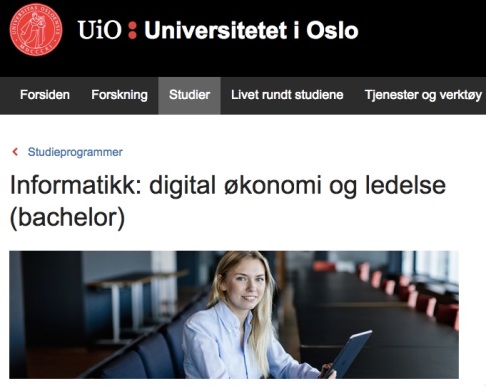 I just got the message that the new bachelor program
  The
The  The
The  The
The  Explore the fjord – Oslo is built around the fjord, and if you can get on a boat – even just taking a summer ferry out to some of the islands – by all means do it. (I live on an island, perhaps I am a bit partial here.) In later years, the city has tried to make the shoreline available for walking (a project called
  Explore Oslo by bike or foot. The
  Extremely important warning: In addition to the weather and clothing issue mentioned above, Norwegian culture is fundamentally built on the principle that you, yourself, and nobody else, is responsible for being knowledgeable and physically capable of doing whatever you set out doing. Norwegians do not believe in protecting people against their own stupidity. (And forget about suing anyone, you’ll be laughed out of court.)
 Mountaineering is great, but where to go if you don’t have much time? Some suggestions from Jotunheimen (but there are thousands of others):

 Norwegians are rather reserved and have a fairly expansive sense of personal space. When the other people at the bus stop are keeping their distance to you, it has nothing to do with you. It’s them. (See The
 I have been asked to give a keynote speech at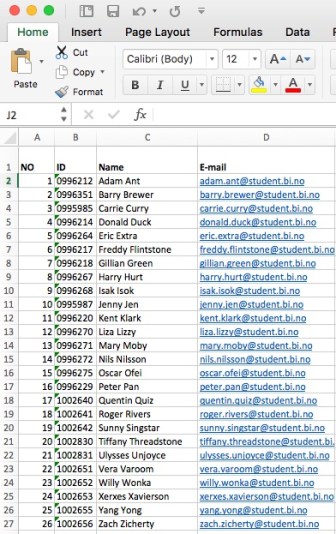








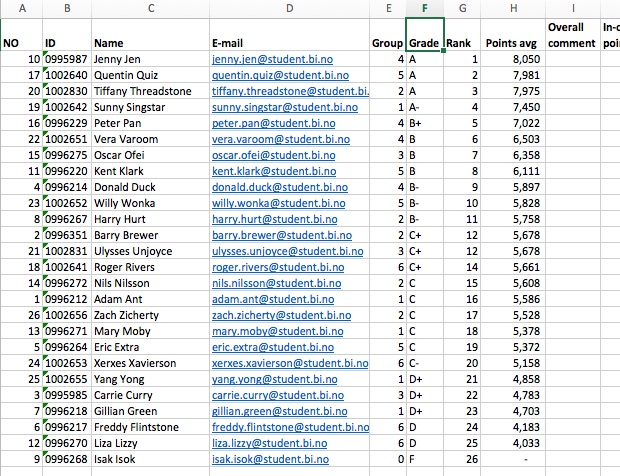






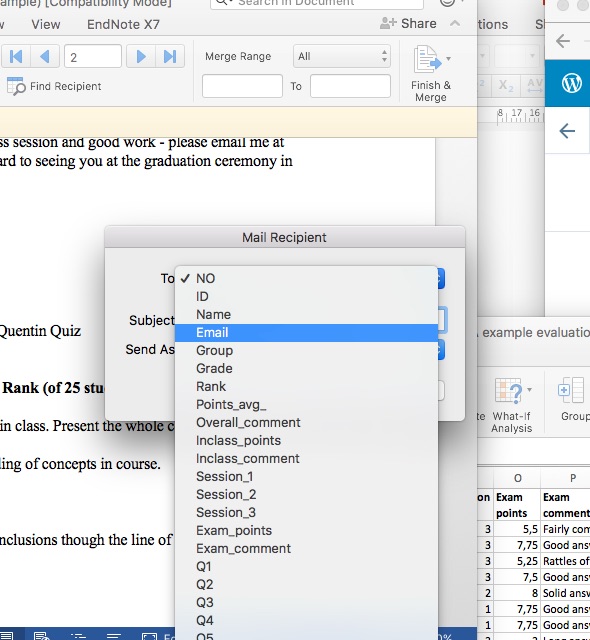
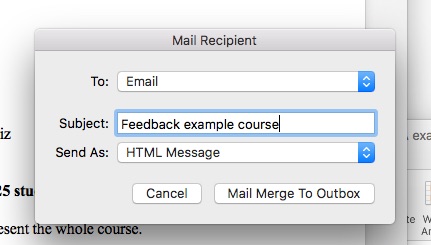

 The hack, of course, is simple: Write next year’s course documentation as you are teaching this year’s course. For instance: I have a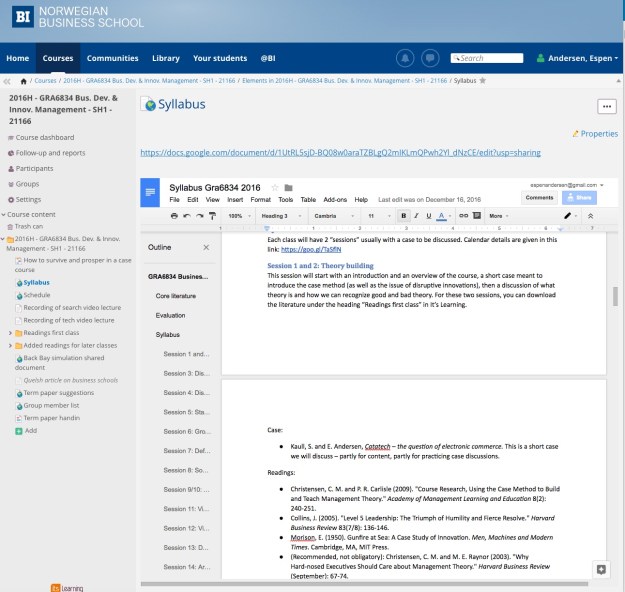

 Apparently, there are lots of things they cannot do that was in the old show, but this has a track, a moveable open studio, and the usual bantering and car racing. Celebrities drop in and out (quite literally.) The video quality is exceptional and the opening five minutes – apparently consuming most of the lavish budget – a kind of panoramic and unapologetic pun on just so many things. The banter seems a little bit forced in the beginning before shoulders come down and jokes get worse and worse (especially Clarkson’s.)
 Self-driving cars will do for personal transportation what e-mail has done for snail mail. Tesla-founder
  have driven several million kilometers without self-caused accidents, but there are still many technical problems left to solve. The cars work well in the well marked and carefully mapped roads of sunny California. The self-driving cars drive well, but the human drivers do not. But we cannot execute a sudden transition – for a long time, human and automated drivers will have to coexist.
