Author Archives: Espen

Unknown's avatar

About Espen

For details, see www.espen.com.

Cold War of the Rings

John Le Carré : Three Complete Novels ( Tinker, Tailor, Soldier, Spy / The Honourable Schoolboy / Smiley's People ) John Le Carré : Three Complete Novels by John le Carré

My rating: 5 of 5 stars

I just spent the Christmas vacation under the covers with a flu, rereading this collection of three of the "Smiley" novels (in a Norwegian translation, which isn’t quite the same thing, though the translator is good).

The arena John le Carré creates here (or, rather, reports from, since he was a part of the real thing for a while) is the stealthy and paranoid world of Cold War espionage and counter-espionage, with the physically unimpressive spy-hunter George Smiley as the absent-minded and socially inept anti-hero.

The three books follow each other, not unlike the three main parts of "The Lord of the Rings" (come to think of it, it shouldn’t surprise me if le Carré structured it this way on purpose): The first book (Thinker, Tailor, Soldier, Spy) concerns the hunt for a "mole" inside Circus, an thinly veiled version of MI6, defectors and all. The second has Smiley as a less central character, instead giving an operational agent named Jerry Westerby (the "Honourable Schoolboy" of the title) first billing, as he tries to locate and then secure an important Chinese defector through investigations during the final weeks of the Vietnam War. The third ("Smiley’s People") concerns Smiley’s attempt to penetrate the Soviet intelligence organization in a final battle with his nemesis, a the shady and very competent spymaster Karla.

I like these books for their accurate depiction of the fear underlying much of the cold war, the way "little people" become pawns in a game they (and, many times, not their bosses either) understand. Aside from the gloriously tragic figure of Jerry Westerby, the spy game is one of meticulous investigations, bureaucratic frustrations, occasional high hopes with correspondingly deep disappointments. How far can you go in order to win – can you sacrifice people, sometimes with their consent, for an uncertain victory in a cause you are no longer sure about? I think these three books are the best John le Carré wrote, with the possible exception of "The Little Drummer Girl". Reading them again brought back the haunting specter of the dictatorship next door, the nagging fear most people of my generation grew up with, the uncertain enemy with powerful weapons, fought by vicarious means with a realization that the individuals involved had very little to say in the big decisions.

The question remains – who, if anyone, had?

View all my reviews >>

Newton as master detective

I am currently working from home, laid somewhat lower than usual by a persistent cold. One way to pass the time in between attempting to do actual work is padding through some of the bookmarks of "things I will read when I have time." Here is one gem I marked four months back – Thomas Levenson‘s brilliant talk on his book about Isaac Newton‘s tenure as Master of the Royal Mint, where he had to deal with counterfeiters (particularly William Chaloner) by setting up his own detective force:

http://mitworld.mit.edu/flash/player/Main.swf?host=cp58255.edgefcs.net&flv=mitw-01207-writing-newton-levenson-06oct2009&preview=http://mitworld.mit.edu//uploads/mitwstill01207writingnewtonlevenson06oct2009.jpg

Levenson draws lines to modern economy and shows how Newton had a quite sophisticated understanding of modern economy, was a smart investor, particularly in the South Sea bubble in 1720, and then fell victim to his own greed. Highly recommended!

Jay Leno remakes Rendezvous

One of the most famous car movies ever made was Claude Lelouche’s C’était un rendezvous, which is a single take, 9 minutes long, of an incredibly fast drive through the streets of Paris. The film was not speeded up, and the only safety concession was a lookout near the Louvre for a particularly sharp turn into traffic. The car used was a Mercedes 450SEL 6.9 (erhm, not unlike mine…) but the sound of a Ferrari was overlaid later. Here is the result:

Now Jay Leno, car collector and talk show host, has made a version of this for LA, doing a lap around Mulholland Drive and Beverly Hills in a Mercedes SLS AMG. Though not as exciting as the original (given that the driver is identified, it would have landed him in jail), it nevertheless induces some of that sinking stomach feeling from going really fast around a bend with a good car. (Note that the speedometer is never shown.) Enjoy:

http://c.brightcove.com/services/viewer/federated_f9/1813626064?isVid=1&publisherID=1564549380

(Yes, it is kind of childish, I know. But fun.)

7 hour train journey via Bittorrent

The Norwegian broadcaster NRK recently made a 7 hour program about the very scenic train journey from Bergen to Oslo. The program was hugely successful despite the rather slow subject, offering long views from the front of the train interspersed with interviews and various other happenings along the ride). Here is a selection:

The raw film from the front camera is now being offered as a free Bittorrent download under a CC license. There is even a competition (in Norwegian only) for best reuse of the footage.

Kudos to the people behind NRK Beta, the experimental part of NRK, who again come up with interesting ways of making their material available!

Update 20.12: Boingboinged!

How about donating to Wikipedia?

Wikipedia Affiliate ButtonAs the holidays come up, how about making a donation to Wikipedia? The canonical Internet encyclopedia has no other income than donation, and need money for running technical and other costs.

A donation to Wikipedia – no matter how small – ensures that you will still have access to one of the world’s most complete and updated sources of knowledge. It is also a way to support a project which goal is to provide all the world’s knowledge to all the world’s people, in a form and with an interface that permits everyone to use and enhance it.

I am convinced that Wikipedia today is the single most influential collection of knowledge available, and the one that helps the most people, be they pupils, students, knowledge workers or anyone without access to the knowledge and learning infrastructure we in the richer and more liberal parts of the world take for granted. 350 million people go to Wikipedia to find neutral and detailed knowledge about the world we live in. Do your part so that it can be sustained and evolved further!

(Incidentally, it is really simple, as well. Credit cards accepted. Easily)

Fire wall effects

Got to say it: Having Twitter and Youtube blocked by the Great Fire Wall of China sure drives up my blogging frequency….

I do feel for my Chinese academic colleagues who want to do research on social media, though.

Cringely bows out (with predictions)

Bob Cringely has written his last column for PBS, and bows out after 11 years. I for one will miss his long, mostly insightful and always readable columns. He predictably comes up with ideas that are different from what other pundits write, is frequently wrong (4 for 11 in the prediction market is not wonderful, exactly) but always interesting.

And I do like his latest prediction: That VCs will channel money into starting small banks that can extend credit to the very creditworthy companies currently cash-strapped because most of the incentives and the focus is on mortgages. Might not happen, but deserves to.

Bob will, of course, not stop writing (he has his own website, of course, like any professional tech writer) but I particularly like the long essays he has been posting at PBS.org and hope he will continue that format, in some highly visible channel.

Obama impresses again..

…this time with a ready message about a prize given too soon: The US is the world’s guarantor of peace and democracy, no matter what others may think about it. And in that role, the country needs and deserves the world’s trust that it is doing the right thing – and gives the assurance that it will listen.

An impressive speech, given the uncomfortable situation the Nobel committee has placed Obama in.

To paraphrase the (Republican, but well-traveled and well-read) humorist P. J. O’Rourke: No matter what you think about the US, please notice that when the world needs power behind good arguments, nobody calls Sweden (or, for that matter, Norway.)

Web sites blocked in China

Currently I am sleepless in a hotel in Shanghai, where I am teaching a four-day module on IT and technology management at the NSM-Fudan MBA program the Fudan University School of Business. I do this about twice a year.

Every time I am here, I try to figure out what websites are blocked by the "great Internet wall". It differs from time to time, and between the hotel and the university. Currently, I cannot get to

  • Youtube (but Google Video is available, can’t show Youtube videos, though)
  • Twitter
  • Facebook (but Gmail works fine)
  • Bloglines
  • various blogs, including anything from Blogger.com og Blogspot.com
  • bit.ly and other redirectors/URL shorteners

On the other hand, Wikipedia is available, as are all the big news services. It seems self-publishing is seen as more dangerous than anything hewing to a more traditional process. Or, rather, sites where you can self-publish in Chinese, outside of China.

The trouble with airline movies

I am writing this from a business class seat between Frankfurt and Shanghai, which I cannot, in all fairness, describe as an altogether frightful experience, in between good red wine, awful whisky (unfinished), reading Alfred Chandler’s very enjoyable Strategy and Structure (I am teaching a session on it mid-January) and Nassim Taleb’s equally enjoyable The Black Swan at the same time.

Another thing they have in business class is movies – a terrifyingly bland selection, which led me to choose Love Actually, something of a family tradition. Only, this was is the airplane version, which is edited for offensive content. This turns out to be most of the interesting dialogue and quite a lot of the story. Not only is all of the glorious swearing (and lots of other colorful language) missing, but one of the subplots (involving two stand-in actors performing an ornate sex scene on a film set while conducting a very bashful courtship.) Not to mention that even "complicated" words are edited out, and whole scenes missing.

I think this kind of ham-fisted sanitization is a particular problem for English comedies – they enjoy their swearing and sexual innuendos and perform them with panache and inventiveness. The watered-down and sensibility-tested version just doesn’t wash at all.

(Incidentally, in the screenplay to Four weddings and a funeral, Richard Curtis talks about how having to shoot the airline version of his comedies brought even more swearing into the world, as the director invariably had to be reminded after finally completing a long series of takes of a complicated scene that they now had to do it all over again for the airline version.)

Which leads me to think – I have watched a lot of movies on airplanes (my main source, come to think of it) – what have I missed? Perhaps all those bland comedies and dramas actually were a lot better than I thought?

Reflections on Accenture’s Technology Lab

I am writing this from Accenture’s Sophia Antipolis location, where I am visiting with a group of executive students taking a course called Strategic Business Development and Innovation (the second time, incidentally, last year’s notes are here). Much of this course is around how to use technology (in a very wide sense of the word) to do innovation in organizations. To turn this into practice, my colleague Ragnvald Sannes and I run the course as an innovation process in itself – the students declare an innovation project early in the course, and we take them through the whole process from idea to implementation plan. To further make this concrete, we collaborate with Accenture (chiefly with Kirsti Kierulf, Director of Innovation in Norway) to show the students some of the technologies that are available.

Accenture Technology Labs is a world-wide, relatively small part of Accenture’s systems integration and technology practice, charged with developing showcases and prototypes in the early stage where Accenture’s clients are not yet willing to fund development. While most consulting companies have this kind of activity, I like Accenture’s approach because they are very focused on putting technology into context – they don’t develop Powerpoints (well, they do that, too) but prototypes, which they can show customers. I see the effect on my students: I can explain technology to them (such as mobility, biometrics, collaboration platforms) but they don’t see the importance until it is packaged into, say, the Next Generation Bank Branch or an automated passport control gate.

Making things concrete – telling a story through hands-on examples – is more important than what most companies think. When it comes to technology, this is relatively simple: You take either your own technology, if you are a technology provider, and build example applications of it. If you are vendor-agnostic, like Accenture, you take technology from many vendors and showcase the integration. If your technology is software-based, or consists of process innovations, then you showcase your own uses of it. Here in Sophia we have seen how Accenture uses collaboration platforms internally in the organization, for instance. (Otherwise known as eating your own dog food.)

Having a physical location is also very important. At the Norwegian School of Management, we have a library that we like to showcase – a "library of the future" where the students have flexible work areas, wireless access to all kinds of information, in an attractive setting. This looks nice on brochures, but also allows us to highlight that the school is about learning and research, and allows us to tell that story in a coherent manner. I see Accenture as doing the same thing with their labs – they develop technology, but also showcase the activity and its results to the rest of the world. The showcasing has perceived utility, generating the funds and managerial attention (or, perhaps, inattention) necessary to sustain the prototype-producing capability.

Quite a difference from slides and lunch meetings, I say. And rather refreshing. An example that more companies should follow.

GRA6821 Eleventh lecture: Search technology and innovation

(Friday 13th November – 0830-about 1200, room A2-075)

FAST is a Norwegian software company that was acquired by Microsoft about a year and a half ago. In this class (held with an EMBA class, we will hear presentations from people in FAST, from Accenture, and from BI. The idea is to showcase a research initiative, to learn something about search technology, and to see how a software company accesses the market in cooperation with partners.

To prepare for this meeting, it is a good idea to read up on search technology, both from a technical and business perspective. Do this by looking for literature on your own – but here are a few pointers, both to individual articles, blogs, and other resources:

Articles:

  • How search engines work: Start with Wikipedia on web search engines, go from there.
  • Brin, S. and L. Page (1998). The Anatomy of a Large-Scale Hypertextual Web Search Engine. Seventh International WWW Conference, Brisbane, Australia. (PDF). The paper that started Google.
  • Rangaswamy, A., C. L. Giles, et al. (2009). "A Strategic Perspective on Search Engines: Thought Candies for Practitioners and Researchers." Journal of Interactive Marketing 23: 49-60. (in Blackboard). Excellent overview of some strategic issues around search technology.
  • Ghemawat, S., H. Gobioff, et al. (2003). The Google File System. ACM Symposium on Operating Systems Principles, ACM. (this is medium-to-heavy-duty computer science – I don’t expect you to understand this in detail, but not the difference of this system to a normal database system: The search system is optimized towards an enormous number of queries (reads) but relatively few insertions of data (writes), as opposed to a database, which is optimized towards handling data insertion fast and well.)
  • These articles on Google and others.

Blogs

Others

Longer stuff, such as books:

  • Barroso, L. A. and U. Hölzle (2009). The Datacenter as a Computer: An Introduction to the Design of Warehouse-Scale Machines. Synthesis Lectures on Computer Architecture. M. D. Hill, Morgan & Claypool. (Excellent piece on how to design a warehouse-scale data center – i.e., how do these Google-monsters really work?)
  • Weinberger, D. (2007). Everything is Miscellaneous: The Power of the New Digital Disorder. New York, Henry Holt and Company. Brilliant on how the availability of search changes our relationship to information.
  • Morville, P. (2005). Ambient Findability, O’Reilly. See this blog post.
  • Batelle, J. (2005). The Search: How Google and Its Rivals Rewrote the Rules of Business and Transformed Our Culture. London, UK, Penguin Portfolio. See this blog post.

GRA6821 Tenth lecture: Project disasters and IT service delivery

This lecture will deal with issues that are (at least superficially) boring but eminently practical: How to avoid systems disasters, and how to deliver IT services within a company. The system disaster we will talk about is CONFIRM, an ambitious project to try to replicate the success of the SABRE reservation system in the hotel and rental car industries. In my experience, it is a real career helper to a) be able to understand when a project is beginning to acquire a whiff of disasterhood, and b) how IT services are provided inside large companies, whether you want to work there of sell your services to either the company or the IT department. The latter you can learn in two hours in a classroom or in two years in a company.

Read and be prepared to discuss:

  • "The Collapse of CONFIRM: What went wrong?", p. 534 in Laudon & Laudon: Management Information Systems, Fourth edition, Prentice-Hall, 1996
    (You might want to go back and revisit Max Hopper’s article on "Rattling SABRE", note the role of CONFIRM in it)
  • Oz, E. (1994). When Professional Standards are Lax: The CONFIRM Failure and its Lessons.Communications of the ACM, 37(10), 29-36.
  • Various other notes, see Blackboard.
  • Langewische, W. (1998). "The Lessons of ValuJet 592." Atlantic Monthly (March).
  • The Concours Group (2004): Service-centric IT (in Blackboard). A consulting report on how to organize an IT department.

Recommended literature:

  • Weill, P. and R. Woodham (2002). Don’t Just Lead, Govern: Implementing Effective IT Governance. Cambridge, Massachusetts, MIT Center for Information Systems Research. Available (number 326) from CISR’s paper web page
  • Weill, P. and S. Aral (2004). IT Savvy Pays Off. Cambridge, Massachusetts, MIT Center for Information Systems Research. Available (number 353) from CISR’s paper web page
  • Weill, P. and M. Broadbent (1998). Leveraging the New Infrastructure. Boston, MA, Harvard Business School Press. Good book on IT management.

Study question:

  • Looking at the CONFIRM disaster – what were the technical reasons for the failure, the organizational (management) reasons, and the strategic (business) reasons?
  • How is running an IT shop (inside an organization), an outsourcing company, and an IT consulting company different – and similar – to each other?

Say what you will about the Gubernator…

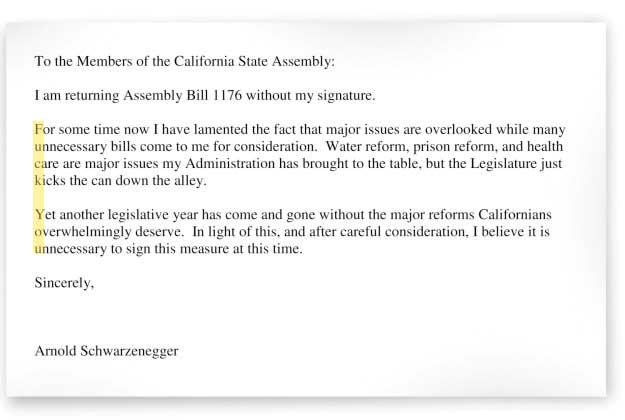
Some years ago I talked with a Berkeley professor who first was shocked when Arnold Schwarzenegger was elected guvenor of California – then, a year later, had to grudgingly concede that he wasn’t all that bad – especially in that he took on the State Assembly, which is incredibly conservative in its vested-interest radicalism. The following message recently sent to the State Assembly shows that he (or someone on his staff) has a sense of humor, too:

image

How I wish the underlying messages of other political emissions where equally clear…

(Via boingboing, which, true to form, spends most of the comments on calculating whether this was a coincidence or not…)

GRA6821 Ninth lecture: Software development

October 30, 2009, 0800-1045

(This is a temporary entry – there will be more description and perhaps more literature later….)

Creating technology is far from easy – specifically, creating software involves a number tools and techniques that are crucial to overcome the fact that systems are complicated, abstract, and involves interdependencies with many other systems. To understand this we will hear from some of the most experienced software engineers and software project managers in Norway.

image Our guest lecturers on October 30 will be Dalip Dewan, Senior Vice President of Technology, and Rune Steinberg. Both work at Visma, one of the largest software companies in Norway.

Dalip Dewan has a very interesting background, has built large systems and been responsible for the design and building of software platforms to facilitate consolidation and integration of acquired software companies under the Visma umbrella. He is an excellent speaker and a very demanding discussant – come prepared!

image With Dalip will be Rune Steinberg, a computer scientist who has collaborated with Dalip on the development of software engineering and management methods for more than 10 years.

I can promise an exciting class on how to manage software development, particularly integration of many systems, as well as real-world experience on how to manage the people that make the systems.

Read the following:

Wikipedia assignment

(The full text of this assignment can be found here)

This assignment is intended to teach you something about collaborative software – and what better way to learn that than to use it? (A side benefit may be to improve the quality and quantity of information available in the English or Norwegian version of Wikipedia.) Wikipedia is an on-line encyclopedia, written collaboratively (that is, by the readers). It uses wiki technology, and everybody can update everything. Order is maintained by common goals and common behavioral norms.

Assignment: (The following can be done in either the Norwegian or the English version of Wikipedia.) Be advised that this assignment takes time, so a good idea is to start early and work on it consistently over the time of the course.

  1. Register yourself as a user, read some of the documentation about what Wikipedia is and how it is to be used. You will find links to it on the main page. (The material in the English version is most rich here, of course.)
  2. While logged in, start editing and writing articles – anything you do will be tracked. Write on whatever you want, but make sure that you follow the intention of the Wikipedia. (The Norwegian version is probably the easiest to do this in, since many more articles there either are missing or in need of further development).
  3. Go to the course Wikipedia page (English or Norwegian version) and add yourself to the list of students, making sure you use the correct format (for an idea, see the 2005 list). (The intent here is that I should be able to click on each student, and then see what articles the student has worked on.)
  4. Write me a memo, marked with both your student number and your Wikipedia user name, and whether you used the Norwegian or English Wikipedia version. For a total of less than 600 words, answer these questions:
    1. What, if anything, surprised you the most about the Wikipedia?
    2. What uses can you see for this technology in a corporate setting? What does it take for it to be successful?
    3. For which kind of businesses and technologies can Wikis be a disruptive technology?

Seeking M.Sc. students to study the Norwegian IT industry

The Norwegian School of Management is starting a large research project called "A Knowledge-based Norway" ("Et kunnskapsbasert Norge"), where the goal is to study Norwegian "knowledge hubs" – knowledge-intensive industries and how they create and distribute knowledge. The project is led by Torger Reve and Amir Sasoon, and will encompass 10 different industries.

I have been tasked with one of these industries – the Norwegian IT industry, and is therefore seeking M.Sc. students who wants to write their theses under this topic. This will involve studying individual companies (such as, for instance, EDB Business Partner, Accenture or Opera Software) or groups of companies (say, the Norwegian IT services sector, or software companies supporting the oil industry) to understand how they develop knowledge, interact with each other and their customers, evolve their markets and their services, and so on.

The upshot for students, of course, is that they get to learn something that is very relevant both from a research and a practical (read: career) perspective. The study starts these days and will finish in about two years, which will make it ideal for M.Sc. students starting their thesis work this or (to a lesser extent) next Fall.

Please contact me at self@espen.com if you are interested.

GRA6821 Eight lecture: Disruptive technologies

(October 23, 2009, 0800-1045, C2-040)

Disruptive technologies (later changed to disruptive innovations) has become something of a buzzword – you can hardly hear of a new technology or service that isn’t branded as disruptive these days, especially if it also makes use of other spiffy technologies and concepts such as cloud computing and Web 2.0.

In this lecture, we will look into the practicalities of disruptive innovation, in the context of a case of a company – Sonosite, which produces a technology that can be brought to market in several different ways – each with its own set of possibilities and difficulties. Technology strategy can be simple in theory and very hard to do in practice, as you will see when you read and analyze the case.

On a more administrative note – this is the date when I expect you to start thinking, in writing, about your term project and the paper it is supposed to result in. I have made available a Google document where you can write in your suggested term paper topic and group – and make comments on your colleagues’ efforts. Please edit this document before 2000 on October 22.

Please read and be prepared to discuss:

  • Chapter 7 (versioning) in Shapiro and Varian
  • Utterback, J. M. (1994). “Chapter 7: Invasion of a stable business by radical innovation” Mastering the Dynamics of Innovation. Boston, MA, Harvard Business School Press.
  • Most of the Christensen & Raynor book
  • Clayton M. Christensen, Stephen P. Kaufman, and Willy C. Shih: Innovation Killers: How Financial Tools Destroy Your Capacity to Do New Things, Harvard Business Review, January 2008
  • Case: Sonosite: A View Inside

Recommended literature:

  • The whole of Utterback’s book
  • Watch this video from MIT, seeing Clayton Christensen teaching live.

A not very likeable character

Henrik Ibsen Henrik Ibsen by Robert Ferguson

My rating: 4 of 5 stars Found this in my bookshelf when looking for Ibsen’s collected for one of my daughters. Good, mostly based on correspondence, traditional chronological discussion, underscores Ibsen’s very secluded nature and tendency to write himself into every play. Not to mention his love-hate relationship with his home country, keen eye on sales figures, vanity, callousness towards his family and monomanical focus on his work. Not a very pleasant man – all his humanity came out in his plays, apparently. (Based on the Norwegian version of the book.) View all my reviews >>