Author Archives: Espen

Unknown's avatar

About Espen

For details, see www.espen.com.

The Oslo attacks

20110723-halvstangMy family and I have received many emails from friends in the USA and other places, offering their condolences and wondering if we are OK. (We live in Oslo, on an island, and from a distance it is natural to worry.) This post is to address those issues and reflect a little on what this means in Norway.

Our youngest daughter was alone at home (about 5 kilometers from the site) when the initial explosion (video here)occurred, and felt the impact in the house. Julie (oldest daughter, interviewed here by Boston Globe) was waiting for a bus in town about 800 m from the bomb site and both heard the explosion and felt the impact quite forcefully. She works in one of the buildings very close to the site, but was on sick leave at the time. Many of the windows in this building were blown out. Our middle daughter was away in the South of Norway. Lena and I were in Germany visiting friends, we returned early this morning.

As far as we know (and the names of the dead and wounded will not be made public until later this week) nobody we know directly has been directly harmed. Our youngest daughter knows, indirectly, five of the youths listed as missing. As I am writing this, 7 people are confirmed dead in the explosion, 86 (later revised down to 68) in the subsequent shootings on the island. About 73 are listed as seriously or critically wounded, 4-5 missing.

Lena and I drove through the Oslo City center on our way home at 2am this morning. The main government buildings and the bombing site are cordoned off and guarded by soldiers, and there are policemen on many street corners.

As unlikely as it may seem, the attacks are probably the work of one man, a fairly well-to-do islamophobe who has planned this for nine years. The intent seems to be to gather attention for a self-published manifesto, a feverish 1500-page PDF screed detailing his inflated self-picture, confused world views and preparations for the attack. The bomb attack was similar in technique and effect to the Oklahoma bombing, but with relatively few casualties due to it being vacation time and relatively late in the afternoon. The ensuing attack on the island (which is very small, about 200 x 500 meters) with the summer camp left such a devastating result because there are few places to hide and nowhere to run. Also, the gunman was dressed as a police officer and fooled many into getting close enough to him that they could be slaughtered.

The whole country is in mourning – at noon a silent minute was observed here and in the other Nordic countries. The Prime Minister and other public figures have shown remarkable dignity and restraint in a situation that must be inhumanely hard, especially since many of the killed and wounded were personal friends.

Norway is very small – as the poet Nordahl Grieg wrote during the second world war: “We are so few in this country, every fallen is a brother or friend.” In proportion to the population size, this attack has claimed roughly twice as many victims as 9/11. The 500 youths at the summer camp came from all over the country. In such a small society, everyone knows or knows of someone who has been harmed.

Norway has always been a very open society – the police is largely unarmed, you can run into public figures with few or no security guards (in fact, we met the Prime Minister on a bike tour in the city forest in April this year,) political meetings and demonstrations take place with a minimum of security presence. This openness and trust is highly valued by all. It is my hope and expectation that the actions of a deranged loner will not succeed in destroying one of the most cherished attributes of this small and close-knit society.

The modern male

This is all over the net in an encore, so let’s hang it here as well – George Carlin in the definitive description of modern manhood:

Gotta go. Things to do…

Orotund oracularity

Oracle NightOracle Night by Paul Auster
My rating: 3 of 5 stars

Lent to me by my daughter, and like her, I admired the writing and story-within-story interconnectedness, but was left with a nagging wonder – what was really the point? Siri Hustvedt, Paul Auster’s wife, has written What she loved, and that is really a better book for this kind of intertwined, dramatic New York story, where violence and mystery happens in a chamber play of mysterious and sometimes amoral characters. But by all means, a good read.

View all my reviews

Optimistic rationality – relief from the doomsayers

The Rational Optimist: How Prosperity EvolvesThe Rational Optimist: How Prosperity Evolves by Matt Ridley
My rating: 4 of 5 stars

Matt Ridley, science writer and commentator, delivers a blistering attack on the pessimists of the world, who extrapolate their way to doom and gloom, whether it be a new Ice Age, overpopulation, markets rather than hierarchies, energy crises, food scares and epidemics. He shows, with a wealth of examples (not always well referenced – especially the statistics) that the human race, due to its unique in its ability to trade goods, services and ideas with people outside the family or other small group, will succeed in overcoming challenges – including global warming.

For someone who grew up under the threat of nuclear annihilation (I remember thinking, as an 18-year old, that there would be little point in getting an education because we were all going to die in an atomic blast anyway) this is another of those books (Steven Pinker’s The Blank Slate, Dan Dennett’s Consciousness Explained and David S. Landes’ The Wealth and Poverty of Nations being others) that convincingly reinforces by trust in science, innovation and knowledge’s worth and ability to create the future – a future we have not chance of extrapolating ourselves into.

Enjoyable – a simple premise, well argued and organized. Recommended.

View all my reviews

Tim Minchin’s Stormy dinner conversation

This video by the rather hard-to-control Tim Minchin is so brilliant that I just have to have it grace my unworthy and insignificant corner of the blogosphere:

And now I know where to point people who tells me I don’t know everything…

(via Gunnar’s excellent Norwegian blog). And here is a live, text-based version.

Close-hauled on a bowline

image …or something like that. The effects of reading Patrick O’Brian‘s Aubrey-Maturin novels (which I bought about five years ago and have now read for the second time) is that of slowly sinking into another world altogether, a world where communication may take months and even years, where a shipment may not even get out of harbor for want of wind, where bread has parasites (teaching one to learn to choose the lesser of two weevils) and meat has to be softened by towing it alongside the ship before it is even close to edible.

image Despite the success of the Master and Commander movie, these books are unlikely ever to be made into more movies or a TV series – for one thing, it would be prohibitively expensive, for another, much of the excitement and readability of the books lie in their historical accuracy, their wealth of detail, their quiet humor, and most of all in the wonderful language. I love the the descriptions of political intrigues, the reflections on medical and other science of the times as experienced by Stephen Maturin, and the intricate and confusing legal details of Jack Aubrey‘s fighting commons inclosure and other (usually unsuccessful) adventures.

image As the novels progress (and they are all good, by the way, no reduction in quality over time, in fact, they get better), you gradually learn to appreciate the main protagonists as people – initially cardboard figures, they gradually, through what they do and what they say, emerging as more complete personalities. Much more believable than Hornblower and Bush or Holmes and Watson, Aubrey and Maturin emerge as multifaceted and complex characters with personalities, flaws and qualities understood and appreciated not just by the reader, but by the vivid and rich set of characters met throughout the series.

I thoroughly enjoyed these books the first time I read them, and they improve upon the second acquaintance. Above all, the language is a delight. Like Frans Bengtsson’s incongruously titled The Long Ships (best enjoyed in its original Swedish version, Röde Orm) the novels are held in a language close to that of the times – close enough that I find my own English growing increasingly orotund with each page. Oh fie, O’Brian, for inciting me to top it the knob and engage in idle prating…

Highly recommended!

image(Incidentally, should you decide to buy the series, make sure you buy the paperback versions from Norton, either individually or all at once, with the original paintings by Geoff Hunt. The boxed complete set from 2004 has, unfortunately, been scanned and then poorly copy-edited, introducing many irritating errors (or, rather, vexing imperfections.) And by all means, get the companion volume Sea of Words, which will explain bowlines and capstans and gratings and tompions and weather-gage and other essential terms.)

Hiatus bloggiensis

It has been rather quiet here lately – for three reasons:

  • I find that Twittering is a quicker way to leave links to interesting pages. However, TweetsTwits (alas not) are ephemeral, also for me, and recently I glanced back at some of my blog posts commenting other pages and found they were useful, whereas I never go back to look at my microblog mutterings. So I will return to snippet posting for my own reference here.
  • I had in mind of upgrading the blog software (from Movable Type 3.x) but when I checked some time ago (and even paid for an upgrade) my ISP didn’t have the right version of MySQL etc., etc. Upgrade moved to back burner and promptly forgotten. I am now contemplating WordPress and moving my blogs to their native (rather than pointing) domains.
  • And lastly, I am heads down in various research projects that take time (and should take time) away from blogging.

On the other hand, I have now turned 50 and am approaching what should be called the age of rumination, so we shall see if a return to proper bloggery is not imminent.

(And right here, the back broke on my office chair – even the furniture seems to think I should return to doing something else…)

Dragon-dictated and happy about it

image About every fifth year, I purchase some dictation software. I do this because I am a firm believer in technology, in particular the use of technology to overcome personal limitations, such as writer’s block, carpal tunnel syndrome, a propensity for procrastination, and general laziness.

About two weeks after the initial purchase, I typically experience the disappointment familiar to any technology optimist: namely, that the technology does not live up to what it says on the box.

Dictation software, for instance, typically is slow and buggy and doesn’t understand my accent. It also tends to consume all the available processing power of my laptop, a scarce resource if there ever was one, and not play nice with my existing applications.

This time, that may not happen. I am writing this using Dragon dictate software, and not only does it recognize what I’m saying, but it responds quickly and naturally to the various editing and navigation commands that I utter, mostly without looking in the manual. As a matter of fact it is a little bit like dictating to an unfamiliar and not very personable secretary. There are still some problems in the recognition department, such as the software frequently choosing the wrong tense of a verb, but that is easily fixed simply by telling the software to go back and repaired the damage.

This is the fourth time I’m buying dictation software. My first test was in 1996 and simply did not work at all. I then tried again in 1998 and lastly, I think, sometime around 2007. The stuff is gotten better, but there is always been something missing. The difference now, I think, is that the software responds fast enough for you as a user to adjust your behavior to the software almost in real time. As I’ve written before, this almost tactile response is crucial for the usability of a technology, be it on screen via a keyboard or using some other input method.

With the previous versions of this software, I have not been able to experiment enough to properly learn the most useful features of the software, restricting myself to simply entering text, often by reading handwritten notes or other files into the computer. The quick, almost tactile response from the software, along with its seeming ability to learn as we go along leads me to think that this time, for sure, things will be different.

Of course, solving the problem of word recognition and flexible editing does nothing to help with a more fundamental problems that a writer, particularly a brother unsystematic one such as myself, faces. Academic output as a function of processor speed is a flat line, as far as I know, especially if the y-axis is one of quality. But the software might help with my aching underarms, and might prove to be a way of concentrating at the task at hand, because it is very hard to jump into another window and watch a few YouTube videos or check e-mail or twitter using nothing but voice commands.

Now, if it was only available in Norwegian…

(Yes, there are a few errors here. I will let them stand as a demonstration….)

Book nerd challenge

I normally don’t like blog challenges – distinctly 2006 – but this one is from daughter Julie, so I guess I am kind of obliged to…

Have you read more than 6 of these books? The BBC believes most people will have read only 6 of the 100 books listed here. Instructions: Copy this into your notes. Bold those books you’ve read in their entirety, italicise the ones you started but didn’t finish or read an excerpt. Tag other book nerds.

1 Pride and Prejudice – Jane Austen
2 The Lord of the Rings – JRR Tolkien
3 Jane Eyre – Charlotte Bronte
4 Harry Potter series – JK Rowling
5 To Kill a Mockingbird – Harper Lee
6 The Bible
7 Wuthering Heights – Emily Bronte
8 Nineteen Eighty Four – George Orwell
9 His Dark Materials – Philip Pullman
10 Great Expectations – Charles Dickens
11 Little Women – Louisa M Alcott
12 Tess of the D’Urbervilles – Thomas Hardy
13 Catch 22 – Joseph Heller
14 Complete Works of Shakespeare
15 Rebecca – Daphne Du Maurier
16 The Hobbit – JRR Tolkien
17 Birdsong – Sebastian Faulk
18 Catcher in the Rye – JD Salinger
19 The Time Traveller’s Wife – Audrey Niffenegger
20 Middlemarch – George Eliot
21 Gone With The Wind – Margaret Mitchell
22 The Great Gatsby – F Scott Fitzgerald
23 Bleak House – Charles Dickens
24 War and Peace – Leo Tolstoy
25 The Hitch Hiker’s Guide to the Galaxy – Douglas Adams
26 Brideshead Revisited – Evelyn Waugh
27 Crime and Punishment – Fyodor Dostoyevsky
28 Grapes of Wrath – John Steinbeck
29 Alice in Wonderland – Lewis Carroll
30 The Wind in the Willows – Kenneth Grahame
31 Anna Karenina – Leo Tolstoy
32 David Copperfield – Charles Dickens
33 Chronicles of Narnia – CS Lewis
34 Emma – Jane Austen
35 Persuasion – Jane Austen
36 The Lion, The Witch and The Wardrobe – CS Lewis
37 The Kite Runner – Khaled Hosseini
38 Captain Corelli’s Mandolin – Louis De Bernieres
39 Memoirs of a Geisha – Arthur Golden
40 Winnie the Pooh – AA Milne
41 Animal Farm – George Orwell
42 The Da Vinci Code – Dan Brown
43 One Hundred Years of Solitude – Gabriel Garcia Marquez
44 A Prayer for Owen Meany – John Irving
45 The Woman in White – Wilkie Collins
46 Anne of Green Gables – LM Montgomery
47 Far From The Madding Crowd – Thomas Hardy
48 The Handmaid’s Tale – Margaret Atwood
49 Lord of the Flies – William Golding
50 Atonement – Ian McEwan (on the night stand – never seem to get around to it)
51 Life of Pi – Yann Martel (yeah – good book!)
52 Dune – Frank Herbert
53 Cold Comfort Farm – Stella Gibbons
54 Sense and Sensibility – Jane Austen
55 A Suitable Boy – Vikram Seth
56 The Shadow of the Wind – Carlos Ruiz Zifon
57 A Tale Of Two Cities – Charles Dickens
58 Brave New World – Aldous Huxley
59 The Curious Incident of the Dog in the Night-time – Mark Haddon
60 Love In The Time Of Cholera – Gabriel Garcia Marquez
61 Of Mice and Men – John Steinbeck
62 Lolita – Vladimir Nabokov
63 The Secret History – Donna Tartt
64 The Lovely Bones – Alice Sebold
65 Count of Monte Cristo – Alexandre Dumas
66 On The Road – Jack Kerouac
67 Jude the Obscure – Thomas Hardy
68 Bridget Jones’s Diary – Helen Fielding
69 Midnight’s Children – Salman Rushdie
70 Moby Dick – Herman Melville
71 Oliver Twist – Charles Dickens
72 Dracula – Bram Stoker
73 The Secret Garden – Frances Hodgson Burnett
74 Notes From A Small Island – Bill Bryson
75 Ulysses – James Joyce
76 The Inferno – Dante
77 Swallows and Amazons – Arthur Ransome
78 Germinal – Emile Zola
79 Vanity Fair – William Makepeace Thackeray
80 Possession – AS Byatt
81 A Christmas Carol – Charles Dickens
82 Cloud Atlas – David Mitchell
83 The Color Purple – Alice Walker
84 The Remains of the Day – Kazuo Ishiguro
85 Madame Bovary – Gustave Flaubert
86 A Fine Balance – Rohinton Mistry
87 Charlotte’s Web – EB White
88 The Five People You Meet In Heaven – Mitch Albom
89 Adventures of Sherlock Holmes – Sir Arthur Conan Doyle
90 The Faraway Tree Collection – Enid Blyton
91 Heart of Darkness – Joseph Conrad
92 The Little Prince – Antoine De Saint-Exupery
93 The Wasp Factory – Iain Banks
94 Watership Down – Richard Adams
95 A Confederacy of Dunces – John Kennedy Toole
96 A Town Like Alice – Nevil Shute
97 The Three Musketeers – Alexandre Dumas
98 Hamlet – William Shakespeare
99 Charlie and the Chocolate Factory – Roald Dahl
100 Les Miserables – Victor Hugo

Sum total: 51 read, didn’t count the halfways… Hmmm. Wonder if that is good and bad. And why in the world is the Da Vinci garbage on the list?

Oh well, feel free to do your own. Or not.

(Incidentally, here is a much better list.)

FIAT 500 and Structural deepening

One aspect of technology evolution, according to W. Brian Arthur’s excellent The Nature of Technology, is structural deepening: How basic technology adds features over time. Structural deepening is actually one factor which often means we underestimate technology evolution – for instance, a car today costs about as much, in relative terms, as a car did 30 years ago. What you get for your money, however, is something completely different.

A couple of months ago I was walking through the parking garage at the Norwegian School of Management – and I spotted a case of structural deepening in practice. I just had to take a picture or two with my cell phone (which has a camera – an0ther instance of structural deepening, right?):

sep2010 060

The Fiat 500 on the left is from sometime in the 60s, has an engine of about half a liter and a weight of around half a ton. The Fiat Nuova 500 on the right has 2-3 times as much engine, double the weight, is (as can be seen) a lot bigger and also a lot faster. It also has lots more technology – not only headrests, but safety belts, 7 air bags (!), air conditioning, better stereo, steel bars, crumble zones, etc. etc.) It is, supposedly, still considered a small car…

(More pictures after the break)

Continue reading

Norwegian Air Shuttle: Using IT to lower costs, increase revenue, and start new businesses

(This case was written for an BSG Concours/nGenera report in March 2008, but never used. I found it while writing a report on the Norwegian IT industry, and publish it here because, well, I need a place to put it. And it is interesting – it succinctly exemplifies a company that uses IT for lowering cost (increasing the bottom line), for expanding in its current market (expanding the top line), and for creating new businesses.)

Norwegian Air Shuttle is the fastest growing low-cost airline in Europe. Its growth is built on smart market moves – supported by even smarter IT applications and use.

A Norwegian plane - white paint is cheap

Norwegian Air Shuttle was originally a small airline company leasing planes and crew – called a "wet lease" in the business – to Braathen’s, Norway’s second largest airline. When Braathen’s was acquired by industry leader SAS in 2001, it looked like the game was over for Norwegian – it had funding for less than three months’ operations.

clip_image005Bjørn Kjos, lawyer and former fighter pilot, had agreed to help the company through what everyone thought was going to be a managed bankruptcy. Instead, Kjos sought out new investors – Norwegian fishing fleet owners, accustomed to high risk and equally high rewards. With his background as a pilot and sanguine, jovial personality, Kjos personified opposition to the somewhat bureaucratic and monopolistic SAS and became popular both with his employees, the public and the regulating politicians.

The new company’s strategy was simple: To offer direct flights between city-pairs not served by SAS, and keep costs low through efficient processes and a flexible organization. Kjos was not a proponent of information technology, but knew he needed a CIO, and in 2002 hired Hans Petter Aanby, an experienced IT manager from SAS.

Hans Petter AanbyAanby needed to establish IT as a contributor to the business, and so set out to first harvest the low-hanging fruit. First of all, the company’s distribution costs were too high: Most sales came over the telephone or through travel agents, with average transaction cost of more than $35 per ticket. Aanby moved the whole process online in April 2003, removing anything confusing from the web site. The company was one of the first in the business to have customers print out their own (bar-coded) boarding passes, which simplified check-in and saved boarding time. Eventually, 85% of orders would come over the web, and only 1% through the call center. This was achieved with a small IT department and smart use of small consulting companies.

image Having demonstrated an ability to lower costs, Aanby now, with the title of CIO and EVP of Business Development, set out to increase sales. A new architecture that would allow growth in complexity without growth in costs was proposed to the board in late 2003. Airline prices vary, but it can be very hard for customers to see when it is cheap to fly. Many airlines make it hard for customers to find the cheap flights, but Aanby went the other way, giving the customers a calendar-based view of flights with prices shown. Since flight reservation systems are not set up for this kind of information extraction – each query is treated as a potential booking, thus influencing demand figures – Norwegian had to build their own database of flights and prices extracted from the transaction-oriented Amadeus reservation system. The customers responded enthusiastically, since it made it easy to change travel plans to take advantage of lower prices. The application was sold to Amadeus, and the competition eventually had to follow Norwegian’s lead and provide their own low-price calendars.

As Norwegian expanded (eventually flying more passengers outside Norway than inside,) the next step was to establish a new business out of their customer base and transaction platform: Bank Norwegian, an Internet bank that went into operation in the Fall of 2007. Drawing on a satisfied customer set, an experienced IT capability and a sophisticated, yet lean architecture, Norwegian figures it can take the transaction growth and reliability demands a banking application requires.

Kjos, now a converted IT buff, constantly talks about how Norwegian’s IT infrastructure allows the company to expand without growing costs. In August 2007, with a fleet of 22 airplanes, the company placed an order for 42 new Boeing 737 airplanes, for delivery over a five year period.

Norwegian continues to look for areas where IT can make a difference. The airline industry is extremely competitive, and the game is all about being low-cost, yet effective in how talent is employed. Norwegian consciously trains its employees to be capable of performing many tasks – any flight attendant can also do check-in or reservations, for instance, thus enabling the company to use the labor outside the 600-700 hours in the air regular flight personnel can work.

For Norwegian, the trick has to flood the company with IT support before anyone has had time to hire people. And as Aanby has put it: In Norwegian, there are really only two employee categories that are paid above market average: Pilots – and IT people.

In 2007, Hans-Petter Aanby was rewarded for his efforts by being awarded the title CIO of the Year by the Norwegian IT Magazine Computerworld.no – and Norwegian has continued to grow since, now profitably expanding its business while most of its competitors, particularly the traditional airlines, are struggling.

A screwdriver, please

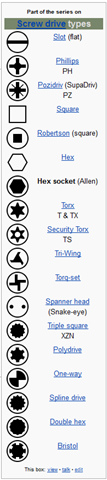
image

This is why I love the Wikipedia: It has not only an article on things like Allen keys, but a whole series (along with the enclosed diagram) of various kinds of screwdrivers.

Not what you would find in a regular encyclopedia, is it?


Record companies lose, artists gain

In early September, two of my M.Sc. students handed in their thesis, which has created quite a stir in the Norwegian music industry. I think this has applicability outside Norway, so here is a translation (and light edit) of the Norwegian-language press release and a link to the full report (PDF, 3,4Mb):

After 10 years of digitalization of music, the average (Norwegian) musician’s income has increased by 66%. As a group, the only losers in digital music seems to be the record companies. This is the conclusion of a M.Sc. study done by students Richard Bjerkøe and Anders Sørbo at the Norwegian School of Management BI in Oslo.

The thesis “The Norwegian Music Industry in the Age of Digitalization” shows that the musicians’ income increase is due to increased income from concerts, various collection agencies and stipends from the government in the period from 1999 to 2009. During the same period, record sales have decreased by about 50%. The fall in income from record sales is less important for the musicians, however, since, on average, they only receive 15% of record sales, whereas they receive on average 50% from concerts and 80% from collection agencies (who collects provisions from radio play and other uses of the artists’ productions.)

– In the interviews we have done with a number of musicians and music producers, the musicians say they are losing money on digitalization, but the numers show that it is the record companies, not the artists, who are losing, says Bjerkøe og Sørbo.

– The fall in record sales also means that record companies are becoming less important as launchpads for new artists, and that records to a larger degree become “business cards” – i.e., a marketing tool – to attract audiences to concerts.

Espen Andersen, associate professor at the Norwegian School of Management, has been the faculty advisor for the thesis. He thinks the results show that artists in the future will have more of their income from concerts and by being played on the radio, TV or Internet streaming services. Musicians will also, to a larger extent, have to take responsibility for their own marketing. The future of the record companies is uncertain and they will need to redefine their role in the music industry.

Facts:

  • Income from concerts has increased, on average, 136% from 1999 to 2009
  • Income from collection organizations such as TONO, Gramo and others has increased 108% from 1999 to 2009
  • stipends and other supports from the government has increased 154% from 1999 to 2009
  • The number of registered active musicians has increased by about 28% during this period
  • All figures have been adjusted for inflation.

For questions, please contact

  • Richard Bjerkøe, +47 9181 8686, rbjerkoe@gmail.com
  • Anders Sørbo, +47 9284 0098, anders.sorbo@no.experian.com
  • Espen Andersen, +47 4641 0452, self@espen.com

A Hitch-reader’s guide to a mindful galaxy

Hitch 22: Confessions and ContradictionsHitch 22: Confessions and Contradictions by Christopher Hitchens
My rating: 4 of 5 stars

The (almost) definitive word on Christopher Hitchens? No – more of a set of quickly and deftly executed watercolors of a life that, at least in the mind, defies any attempt at categorization.

It is rather ironic, but perfectly in script, that Hitchens spends quite a bit in the book discussing impending death and ever-present knowledge that "the party will continue without me", and then, virtually on the day of the book’s publications, discovers that he has contracted, if that is the word, cancer of the esophagus and will be "a very lucky man" if he lives another five years.

Anyway, read this, as much for the language and argument as for the story itself. It puts you in the presence of a mind that is not encyclopaedic (that would be rather boring) but uses literature, history, language and personal connections and experiences as an arsenal for painting the most multicolored, yet consistent canvases you can imagine.

(Incidentally, this is the first new book I bought for Kindle for PC, and the software works admirably, though I wish it was possible to clip out some text for citations.)

View all my reviews

Liberating the process followers

I highly recommend attending the following presentation at the Norwegian Polytechnic Society on Wednesday September 29th at 5 pm. In particular, I think anyone associated with creating systems for complex decision making, especially in the public sector, would find it interesting.

Update Oct.1: You will find a video of the talk here.

Innovative systems for public services: From process following to problem solving
Dr. Richard Pawson, Naked Objects Group

image Dr. Richard Pawson is founder of Naked Objects Group, and a former head of Research Services for Computer Sciences Corporation. He has 30 years experience in IT and related businesses, and has given presentations and consulted with companies all over the world. He holds a Ph.D. of computer science from Trinity University, Dublin, Ireland.

In this discussion, he will talk about how new innovative systems can change how case workers in public services do their job, transforming them from process followers to problem solvers. Richard has designed and implemented a large and very successful system for the Irish Department of Social and Family Affairs which, based on a Norwegian idea of object orientation, allows case workers ("saksbehandlere") to handle very complex problem situations under much larger degrees of freedom than previously possible.

Richard is a highly interesting and entertaining speaker with deep insight in the relationship between information technology and organizational issues. You can look forward to an eye-opening perspective on the organizational issues in public services and how innovative and advanced systems can contribute to solving them.

Notes on my new X201

image I was just about ready to prove my susceptibility to advertising and get a MacBook Pro, but our CIO refused to fund it (gotta standardize, you know) and offered me an X201 Tablet from Lenovo (for free) instead. I promptly demanded more RAM and a 125G SSD, and the matter was settled.

So – what is there to like? For a start:

  • It is about one cm shorter than my previous X61, which is important because it will fit into a standard A4 binder-style leather case
  • The screen is much brighter than the X61, including the wide-screen form factor which somehow seems more natural
  • The SSD really makes a difference. Word and other memory hogs start almost instantly, and the incessant restarts that for some reason still are necessary when configuring a new computer are a lot less patience-trying than before
  • Windows 7 is relatively stable (though my Matrox DualHead2Go has hung it a couple of times), is faster and has a more attractive interface than XP (BI has, rather smartly, avoided Vista), but it is a capable product, not the wonder some of my friends in Microsoft gab about. I do dislike the "switching between tasks" function on the alt-tab key – it will show the underlying applications on screen, but blanks out everything except the current task whiel you are still holding the keys down. The Windows-tab key combination gives you an animated lineup of active windows, but that literally makes me seasick if I used it fast.
  • The keyboard is about 2 cm wider than the X61, which makes it feel like a regular keyboard. Ihas a very nice feel for a laptop, though some of the keys are more noisy than others (an issue I also had with the X61, which could annoy people at conferences with two or three clicky keys.)

On the negative side: I am not impressed by the battery life, and there appears to be all kinds of issues with the suspend/standby/hibernate/whatever shut-down and startup routines, such as the wireless network shutting down at inopportune times. Hopefully this if fixable by fiddling with various settings.

All in all, the X201 looks to become a solid, rather boring but very capable "main working laptop" for me. I sometimes feel like I am the last person in the world actually using the tablet functionality – not, as was envisioned when it was introduced, for note-taking and text editing, but for teaching, especially for large audiences.

But, of course, if I had sprung for the MacBook Pro out of my research budget, I would have been able to get a BookBook. Oh well..

Bonus! I just discovered I can use my fingers to scroll and zoom, iPad-style, right off the screen. W00t! Coolness in a corporate package.

social Media, disruption, and Comic Sans

I gave a presentation at the RECORD seminar in Oslo today, with the title “Social media as a disruptive innovation”. The title was given to me – I do not think social media is much of a disruptive technology (with the possible exception of headhunting) but certain aspects of it, such as its ability to generate metadata and thereby organize information, certainly are.

Incidentally, speaking at an architecture and design school is always interesting – I feel like I really ought to shave my head, get a Steve Jobs mock turtleneck and a fake Mac to blend in with the natives. On Twitter, most comments (#recordseminar) were about my use of Comic Sans, which I do because a) I like it, and b) it is fun using it in front of designers since they are so predictably irritated by it.

Conference calling comedy

This sort of sums it up – I would be the guy from Europe, dialing in an hour early or late due to misunderstandings about summer time or US time zone variations.

Thanks, Jim, for bringing this to my attention!

How will the Internet change how we think?

image The Edge question this year is "How has the Internet changed the way you think?". The result is eminently readable – my favorite so far is George Dyson’s answer, which is quoted here in its entirety:

GEORGE DYSON
Science Historian; Author, Darwin Among the Machines

KAYAKS vs CANOES

In the North Pacific ocean, there were two approaches to boatbuilding. The Aleuts (and their kayak-building relatives) lived on barren, treeless islands and built their vessels by piecing together skeletal frameworks from fragments of beach-combed wood. The Tlingit (and their dugout canoe-building relatives) built their vessels by selecting entire trees out of the rainforest and removing wood until there was nothing left but a canoe.

The Aleut and the Tlingit achieved similar results — maximum boat / minimum material — by opposite means. The flood of information unleashed by the Internet has produced a similar cultural split. We used to be kayak builders, collecting all available fragments of information to assemble the framework that kept us afloat. Now, we have to learn to become dugout-canoe builders, discarding unneccessary information to reveal the shape of knowledge hidden within.

I was a hardened kayak builder, trained to collect every available stick. I resent having to learn the new skills. But those who don’t will be left paddling logs, not canoes.

Short and sweet, in other words. Now, where did I leave that informational adze, what P. J. O’Rourke referred to as the "brief-but-insightful-summary" button?

Does LinkedIn help or disrupt headhunters?

(I am looking for a M.Sc. student(s) to research this question for his/her/their thesis.)

The first users of LinkedIn were, as far as I can tell, headhunters (at least the first users with 500+ contacts and premium subscriptions.) It makes sense – after all, having a large network of professionals in many companies is a requirement for a headhunter, and LinkedIn certainly makes it easy not only to manage the contacts and keep in touch with them, but also allows access to each individual contact’s network. However, LinkedIn (and, of course, other services such as Facebook, Plaxo, etc.) offers its services to all, making connections visible and to a certain extent enabling anyone with a contact network and some patience to find people that might be candidates for a position.

I suspect that the evolution of the relationship between headhunters and LinkedIn is a bit like that of fixed-line telephone companies to cell phones: In the early days, they were welcomed because they extended the network and was an important source of additional traffic. Eventually, like a cuckoo’s egg, the new technology replaced the old one. Cell phones have now begun to replace fixed lines. Will LinkedIn and similar professional networks replace headhunters?

If you ask the headhunters, you will hear that finding contacts is only a small part of their value proposition – what you really pay for is the ability to find the right candidate, of making sure that this person is both competent, motivated and available, and that this kind of activity cannot be outsourced or automated via some computer network. They will grudgingly acknowledge that LinkedIn can help find candidates for lower-level and middle-management, but that for the really important positions, you will need the network, judgment and evaluative processes of a headhunting company.

On the other hand, if you has HR departments charged with finding people, they will tell you that LinkedIn and to a certain extent Facebook is the greatest thing since sliced bread when it comes to finding people quickly, to vet candidates (sometimes discovering youthful indiscretions) and to establish relationships. I have heard people enthuse over not having to use headhunters anymore.

So, the incumbents see it as a low-quality irrelevance, the users see it as a useful and cheap replacement. To me, this sounds suspiciously like a disruption in the making, especially since, in the wake of the financial crisis, companies are looking to save money and the HR departments dearly would like to provide more value for less money, since they are often marginalized in the corporation.

I would like to find out if this is the case – and am therefore looking for a student or two who would like to do their Master’s thesis on this topic, under my supervision. The research will be funded through the iAD Center for Research-based innovation. Ideally, I would want students who want to research this with a high degree of rigor (perhaps getting into network analysis tools) but I am also willing to talk to people who want to do it with more traditional research approaches – say, a combination of a questionnaire and interviews/case descriptions of how LinkedIn is used by headhunters, HR departments and candidates looking for new challenges.

So – if you are interested – please contact me via email at self@espen.com. Hope to hear from you!