
Downstairs in a kind of cave is the kitchen, where an Army cook is baking square apple pies by the quarteracre. The floor is so deeply worn that he has to step over some of the high places. His coal stove is roaring, and he has arrived at that quiet hopelessness that cooks get on finally realizing that their work is never going to be finished, that there is no way of feeding a man once and for all.
John Steinbeck, Once there was a war p. 70
Author Archives: Espen

GRA6821 Seventh lecture: IT economics – and meeting Microsoft
(October 16, 0800-1045, C2-040)
The seventh lecture will be in two parts. One is a discussion of IT economics, with an assignment to be handed in. The second is a guest lecture and discussion by a senior manager from Microsoft Norway.
First part: IT economics
The relationship between information technology and economics – specifically productivity – is tricky. While most executives and all IT companies will agree that investing in information technology is a smart move, just how much you should invest and what the effect of the investment is is a bone of contention. We will explore these questions through analyzing some data from a well known IT practitioner magazine, and compare what they say with the academic literature. Key here is an analytical assignment which is to be handed in before class.
Read and be prepared to discuss:
- Hitt, L., & Brynjolfsson, E. (1996). Productivity, Business Profitability, and Consumer Surplus: Three Different Measures of Information Technology Value. MIS Quarterly, 20(2), 121-142. (In Blackboard)
- The InformationWEEK 500, InformationWEEK, September 1995. (This is for the assignment, and we will discuss this in detail. A tip for the analysis: Focus on the numbers, both those for each industry and those for (or spreadsheet) to compare across industries. And do remember that the individual technologies discussed in the articles is rather old by now (not that technology optimism has changed in any way….)
Study questions:
- What are Hitt & Brynjolfsson’s three measures of information technology profitability — and their conclusions about them?
- How do you justify spending money on general technology, such as desktop computers and Internet bandwidth? How should you structure the spending?
Assignment:
(to be delivered into Blackboard no later than October 15, 2009, at 2000):
Answer the following question:
- Imagine you are a CEO worrying about whether you are spending too much or not enough on information technology. How would the InformationWEEK 500 numbers help you?
For the analysis, here is an Excel worksheet with the numbers. Download the file to your own computer, then analyze it there using Excel or any other software you would want. Note that the numbers and stories are from 1995, so focus on the numbers rather than the technical discussion (though you might note that the language, attitudes and numbers are not very different from what they would be today.) Also note that I will apply the two page maximum limit ruthlessly – that means two pages, nothing more, anything more than that will not even be looked at.
 Second part: Microsoft’s view of the future – a discussion with Petter Merok.
Petter Merok is Director of technology and responsible for business development at Microsoft Norway,. He is also central participant in many ongoing discussions about the future of technology use and development in Norway. He will lead an informal discussion about how Microsoft sees the future – both in business and technology terms.
Please read and be ready to discuss:
- Sherman, S. P. (1984). "Microsoft’s drive to dominate software." Fortune (January 23): 82-90. (this was assigned to the first class as well)
- Andersen, E. (2004). Has the Microsoft of Today Become the IBM of the Late ’80s? Ubiquity, Volume 5, Issue 22. Gotta have one of my own in there…
- Romano, B.J. (2008). "Gates’ big-picture memos", Seattle Times. Gives an idea about changes in strategy in Microsoft, over time.
- Ray Ozzie, 2008: "Services Strategy Update". Another semi-internal memo giving important indications of Microsoft’s strategic direction.
(For a list of all the classes, see here.)
GRA6821 Sixth lecture: Outsourcing and offshoring
(October 9, 2009, 0800-1045, C2-040)
Outsourcing becomes a more and more common way of providing administrative services, such as IT, HR, accounting and customer services (call centers). In this discussion, we will take a look at outsourcing as a phenomenon and try to understand some of the challenges and possibilities it offers, both for the company outsourcing the work and for the company taking it on.
Please study and be prepared to discuss:
- Case: Hostile IS outsourcing: The story of ManuFact (We will start by discussing this case.)
- DiRomualdo, A. and V. Gurbaxani (1998). "Strategic Intent for IT Outsourcing." Sloan Management Review 39(4): 67-80 (Blackboard)
- Dignan, L. (2003). "Leaping, then looking." Baseline (September): 17-29. Short discussion of the economic and competitive implications of "offshoring" and the gradual emergence of a global job market for technology worker. (Blackboard)
- This great article from Wired (written by the indomitable Dan Pink) on various sides of outsourcing to India.
- Andersen, E. (2002). "Stamp Out Technology Virginity!" ACM Ubiquity 3(30).
Study questions
- If you are going to pick just one person (or entity), who is responsible for the Manufact situation?
- Should John take Jim’s offer, and if so, on what terms?
- Why do organizations outsource? How has their intent changed over time? How does this change the outsourcing industry?
Guest lecture
Carl Christian Malm, Responsible for applications outsourcing at Accenture Norway, will give a presentation on Accenture’s work in outsourcing, focusing on the day-to-day details – how do you recognize customer demand, shape the contract, do the work, handle problems, and so on.
Interesting links for the day
- Skewed wisdom of the crowds. Gotta work on becoming more equal than the rest of the crowd.
- Hilarious but somewhat depressing take on mid-life comparison angst. Gotta work on those options.
- Scalzi’s reaction to same. Gotta relax a bit.
Gotta go. Family obligations…
Solving problems in the public sector
In Norway, we have a serious problem in the public sector, namely the merging of many social services (work, health benefits, etc. etc.) into one large organization (well, large for Norway, anyway) called NAV, which simply does not work. I have always thought that this could be solved by using technology to centralize information, then make it available to the case workers, could be the way to go. This presentation by John Seddon, I think, makes the same point, but with less focus on the technology and more focus on understanding demand and tailoring the organization for it:
Cultural change is free from Mindfields College on Vimeo.
Interesting not just for the content, but also for presentation style – though I think the severe criticism ("He’s a wanker.") would be hard to do outside England and with less of an Oxbridge enunciation.
No need to panic
Salon has an excellent interview with Dennis Baron, the author of A Better Pencil: Readers, Writers, and the Digital Revolution (and has a really interesting blog frontpage). His thesis is that the current panic about the Internet making us dumber or destroying the ability to write etc., etc., is a repeat of similar panics caused by previous innovations in content production and not to be worried about. From Plato (on writing) to Wodehouse (who certainly didn’t like dictaphones), pundits have obsessed about how the technology shapes our thinking and foreseen doom and gloom unless we return to the good old days, be it with handwriting or correction fluid.
This, too, shall pass.
(via BoingBoing)
Our search-detected personalities
Personas is an interesting project at the Media Lab which takes your (or anyone else’s) name as input and then determines our personalities based on what it finds about us on the web, generating a graphical representation. This is my result:

…which I found rather disturbing: Fame, sports and religion seems to take way to much space here. The reason, of course, is that my name is rather common in Norway, and, for example, a formerly well known skier skews the results, even though I seem to be the most web-known person with that name.
Anyway, if you have a rare name, it might be accurate – and if your name is John Smith, you might be left with an average, possibly tilted a bit towards Pocahontas:

Anyway – try it out. You might be surprised. And please remember – this is an art project, not an accurate representation of anything…
Update September 20:I somehow forgot to point to Naomi Haque’s blog post about Personas, with discussion of how social networking changes our perception of self.
PhD candidate sought – Social media for innovation
Here is the official text for this announcement. Please contact Asbjørn or me if you are interested, and/or to discuss a project proposal.
BI Norwegian School of Management and SINTEF ICT announces a PhD scholarship for the project ”NETworked POWER. Innovation by social software”
 BI Norwegian School of Management is an internationally leading business school, with a broad research production, a strong international network, and 18000 students at all levels. The school offers a four year doctoral program in business administration. The program features five areas of specialization: Finance and Economics, Strategic Management, Marketing, Leadership and Organization, and Innovation and Entrepreneurship.
 SINTEF ICT is an internationally leading research institute, delivering research-based competence, services and products.
NetPower is a four-year collaborative project between Devoteam daVinci, Innoco, Induct, Bengler, Seniornett, The Norwegian Labour Party, BI Norwegian School of Management (Department of Strategy and Logistics) and SINTEF ICT. The project is funded by the Norwegian Research Council. NetPower has funding for a PhD scholarship, and is looking for a person to fill this four-year position.
Social media for innovation
The evolution of social media the last few years has created new challenges and opportunities at many levels of society. We see the emergence of a strong culture for sharing and exchanging knowledge and experience through new, technologically facilitated network applications. This forms the background for NetPower’s objective: To create social software for innovation, with a focus on private enterprises and non-profit organizations. Within NetPower, Induct creates solutions for Devoteam daVinci and Innoco, and Bengler creates solutions for Seniornett and the Norwegian Labour Party.
The candidate’s research focus will primarily be on the innovation potential of social media for businesses. A suggested research agenda may be 1) To identify and analyze the demands and needs of users and user organizations. 2) To find solutions to challenges around broad participation, privacy and security. 3) To evaluate and analyze solutions. 4) To create knowledge about how social media can be adopted within different organizational cultures. 5) To contribute to theory about social media and strategic innovation.
We are seeking candidates from a wide knowledge background – possible perspectives include, but are not limited to, innovation strategy, including open and/or user-centered innovation, disruptive innovation, strategy process, social network evolution, technology evolution and strategic management of knowledge and knowledge-based companies.
Formal qualifications and personal attributes
The position will be formally located at the Department of Strategy and Logistics, BI Norwegian School of Management, Oslo, Norway. A candidate should have a completed Master of Science degree with a grade B or higher, and be able to speak and understand Norwegian (for collecting and analyzing data within the target organizations). Relevant working experience is, of course, preferable. Appointment to a position as Doctoral Scholar is conditioned on admittance to BI Norwegian School of Management’s doctoral program in accordance with the admission requirements.
The Ph.D. project is central to NetPower – this is where most of the work on open innovation processes and the value of social software in business will be done. The position demands an ability to initiate and follow up relevant research work in close contact with the project partners Devoteam daVinci, Innoco and the software developer Induct. The results should primarily be academically directed, but also useful for the business partners. The candidate must be able to publish in English and deliver within tight deadlines.
We offer:
You will be part of two strong research environments. As a Ph.D. candidate your main place of work will be with the Center for Technology Strategy, a research center focusing on the relationship between technology evolution (especially within software) and the strategic potential and processes of companies. The research center, at this point, has two additional Ph. D. candidates, and is a part of the Department of Strategy and Logistics, currently with about 13 Ph.D. candidates and 45 faculty members.
As a project participant in NetPower, you will in addition collaborate closely with the HCI research group at the department of Collaborative and trusted systems at SINTEF in Oslo. This is the leading research environment on social media within Norway.
The four-year scholarship is set according to the Norwegian State Salary Scale, and currently pay NOK 344,200 per year. The scholarship involves 25% (35 hours) teaching and/or research assistant responsibilities.
For more information about the position as well as some guidance on the proposal, please contact Espen Andersen (self@espen.com, +47 4641 0452) or Asbjørn Følstad (asf@sintef.no, +47 2206 7515). Additional information about the doctoral program and admission requirements can be obtained from the Program Director Dora Sigurdardottir at BI Norwegian School of Management, (dora.s.sigurdardottir@bi.no, +47 46 41 00 57).
The application should include the following:
- Certificate of a Master of Science degree or equivalent with a grade B or higher, please include transcripts of grades
- Other relevant certificates and transcripts
- A project proposal (5-10 pages including topic, proposed method, schedule)
- CV
- Letters of recommendations from relevant employers/tutors providing evidence of your skills as a researcher (if any)
- Certificates from previously completed courses at the doctoral level, if requesting approval of these for the PhD programme at BI Norwegian School of Management (see last section of § 3.1.1 in our PhD Regulations on BIs website)
- A complete list of all publications and/or other documented relevant activities. Please note that certified documentation of formal qualification must be submitted in order to be evaluated.
Applications must be submitted electronically through BI’s website (www.bi.no, see under “vacant positions”, direct link here.). Women are encouraged to apply.
The Department Council of the Institute for Strategy and Logistics will evaluate the project proposals. Candidate
s may be asked to come for a formal interview. Thereafter the project proposal will be sent to the Doctoral Programme Committee for approval.
The application deadline for this scholarship is November 1, 2009. Documentation may not be submitted after the deadline.
Federer’s shot
And this to get a match point in a semi-final..
Notes from Cory Doctorow talk in Oslo
Cory was here to launch the (New) Norwegian version of his book Little Brother, but, of course, this meeting is not as much about the book as about issues of intellectual property, DRM, legislation thereof, as well as the future of information industries such as publishing.
Cory started with “his usual talk” – interesting, as always – about how encryption works, how it is really strong but easily broken from the outside since the key must be distributed, and then on about how the publishing industry is locking up the work of artists in complicated and, given the technology evolution, largely self-defeating.
Cory structures this around three claims by the industry – that DRM works, that extensions of copyright is necessary to preserve artist’s income, and that the industry should have extra-judiciary powers to shut people out from the Internet upon accusation of copyright infringements. The last one is rather interesting, given all the things people do on the Internet today.
The issue is that we are all copyright infringers, because the rules are arcane and really geared towards the relationship between industry and professional artists, with lawyers and everything. That means that we are all vulnerable to capricious accusations, especially given today’s search technology.
(Not really a point in writing this down in detail, I guess, it will be all over Youtube and other places anyway.)
The debate featured Bjarne Buset, Bente Kalsnes, Eirik Newth and Cory. Bjarne Buset, head of digital strategy at Gyldendal (a large publisher) had the hardest task, since he argues in favor of DRM. Bente Kalsnes from origo.no, an online community, pointed out that the publishing industry has been very slow in developing alternative business models. Eirik Newth talked about how we need to sit down and do a typical Scandinavian solution, stepping off the rhetoric and focusing on privacy, users’ rights, and creators’ right.
I tried to make the point that this debate is getting too politicized. The market will fix this, it is called a disruptive innovation, and there will be a lot of noise and then some of the players will make it across and others won’t. secondly, the the debate is being polluted by a lot of idiots who say that stealing is OK, because music should be cheaper or Microsoft is evil. Like some of my (business school!) students, who copy Microsoft Office and justifies it by saying that Microsoft makes so much money and the product is too expensive.
Anyway, I had an interesting discussion afterwards with some of the usual suspects as well as Bjarne Buset. At some point him and I need to enter into a highly publicized bet as to the future of the publishing industry. In the meantime, it is rather depressing to watch the publishing industry go down the oh-so-noble road to self-destruction, just like the record industry.
Update Sept. 17: Forteller has a good post and a recording of the debate (86Mb mp3).
Update Sept. 20: Here is a (rather fuzzy) video of Cory’s talk, as usual he speaks (seemingly) ex tempore:
Gödel, Escher and Bach’s Crab Canon
This piece of youtubery illustrates the fascinating properties of Johann Sebastian Bach‘s Crab Canon (or, more precisely, the first of ten canons in The Musical Offering) where he takes a complicated theme and then proceeds to play it backwards, forwards, and both in unison.
This little piece is well known to anyone who has read Gödel, Escher, Bach: An eternal golden braid, which should be required literature on, well, any course, really. As my old boss Erling Iversen used to say, there are two kinds of IT people: Those who had read Hofstadter’s Gödel, Escher, Bach and those who should. Consider yourself tapped.
(Hat tip to Joho).
Take a few pills and fake it
An excellent article in Wired article points out a rather complicated trend: Placebo effects seem to be increasing. Placebo effect vary with location of trial, observers, and involvement: Pain killers work less well for Alzheimer patients because they can’t anticipate the treatment and mobilize their dopamine, for instance.
In other words, the placebo effect is real, physical and not self-delusion. If that is the case, it can be used in hybrid healing strategies. All well and good – so why is it rising? One reason may be the geographic expansion of trials:
The contractors that manage trials for Big Pharma have moved aggressively into Africa, India, China, and the former Soviet Union. In these places, however, cultural dynamics can boost the placebo response in other ways. Doctors in these countries are paid to fill up trial rosters quickly, which may motivate them to recruit patients with milder forms of illness that yield more readily to placebo treatment. Furthermore, a patient’s hope of getting better and expectation of expert care—the primary placebo triggers in the brain—are particularly acute in societies where volunteers are clamoring to gain access to the most basic forms of medicine. "The quality of care that placebo patients get in trials is far superior to the best insurance you get in America," says psychiatrist Arif Khan, principal investigator in hundreds of trials for companies like Pfizer and Bristol-Myers Squibb. "It’s basically luxury care."
Another reason – which I think is a challenge to pharma in general – is that we are beginning to exhaust the one-factor solution maladies. Most illnesses with clear symptoms and known causes are now fixed, and what remains are those that are complicated, either because the symptoms are the same as many other things, or because they are caused by interactions between many factors and it is very difficult to establish causality. (Much like, in the airline industry, plane crashes tend to be caused by complicated, multi-factor coincidences rather than banal errors, which have largely disappeared.)
The answer lies in better control of experiments (e.g., drug administration without the patient knowing it) and in massive and collaborative data analysis, as the industry now seems to be moving towards. And, perhaps, in the recognition that health care provision is an exercise not only in having the requisite tools and techniques, but also knowing how to combine them so that the sum is bigger than the parts.
GRA6821 Fifth lecture: Technology in value networks
(Update: Moved to October 2nd. Note assignment)
In this lecture, we will continue to investigate value networks and how technology plays a part in establishing a company that mediates between customers – be it a telephone company or a Facebook, a bank or Craigslist.
Please read and be prepared to discuss:
- Chapter 7 of Shapiro and Varian
- Graham, P. (2009): Post-medium publishing. Essay.
- Andersen, E. and Ø. Fjeldstad (2003). "Understanding inter-firm relations in mediation industries with special reference to the Nordic Mobile Communication Industry." Industrial Marketing Management 32|: 397-408.
- Wolf, G. (2009) Why Craigslist is such a mess, Wired Magazine, 17.09
- v.d.Berg, R. (2008): How the ‘Net works: an introduction to peering and transit, Ars Technica,
- Case: Schibsted.
Further reading (for the specially interested):
- Benkler, Y. (2006). The Wealth of Networks: How Social Production Transforms Markets and Freedom. New Haven, Yale University Press. Available as a wiki at benkler.org
- Shirky, C. (2009). Here comes everybody.
Study questions to aid your preparation:
- What is the ownership structure of Schibsted – and what are the implications of it – for the strategic outlook?
- Visit Google News – is this type of service a threat to Schibsted? Why or why not?
- How does Google’s business model differ from Schibsted’s?
- What implications do the last statement – about the cathedral or stock market approach – have for Schibsted’s future?
Assignment 2, to be handed in in Blackboard before October 1 at 2000:
Write a short memo to Kjell Aamot and explain to him why he should (or should not) allow the other parts of Schibsted (such as Sesam) crawl finn.no’s ads. Maximum 400 words, use of theory and good examples important. NOTE: Please limit the discussion to things that are in the case, and at the time of the case. Things have changed at Schibsted later – but that discussion we will take in class.
I am looking forward to a lively discussion and interesting assignments.
(For a list of all the classes, see here.)
GRA6821: Fourth lecture: Technology in value networks, with an emphasis on airlines
(We’ll met on September 18.) Value networks – companies that create value by mediating between customers (or, in the case of airlines, locations) constitutes a large and increasing portion of the economy. In this lecture, we will discuss how value is created in value network, exploring concepts such as network externalities, service complementaries, as well as look at how coordinating technology has changed business models, strategies and processes over time.
This theme is important, and can be hard to understand. We will explore it over two lectures, the first one taking a historical approach, focusing on the US and world airline industry. Next week will will look at telecommunications (mobile telephony) and marketspaces.
You may ask: What has the story of the US airline industry got to do with technology strategy in the early 2000s? I think you will be surprised, but here are a few hints: The US airline industry was deregulated in 1980, technology (both IT and management of the underlying flying technology) has played a visible and very important part, and the industry continues to undergo radical changes and be one of the most challenging industries to strategize in.
So, please read and be prepared to discuss:
- Copeland, D. G. and J. L. McKenney (1988). "Airline Reservations Systems: Lessons from History." MIS Quarterly (September): 353-370. (Heavy article, focus on the start of SABRE vs. JICRS story, and the relevance of that for today.
- Davis, P. (1994). "Airline Ties Profitability Yield to Management." SIAM News 27(5).
- Short article by E. Andersen on transportation industry informational characteristics.
- Hopper, M. D. (1990). "Rattling SABRE–New Ways to Compete on Information." Harvard Business Review (May-June): 118-125.
- Binggeli, U. and L. Pompeo (2002). "Hyped hopes for Europe’s low-cost airlines." McKinsey Quarterly (4). (Available through Business Source Complete)
Further reading (for the specially interested, but this is interesting stuff):
- Smith, B. C., J. F. Leimkuhler, et al. (1992). "Yield Management at American Airlines." Interfaces 22(1): 8-31
- The whole Copeland/McKenney article
Questions:
- What are the important competitive dimensions in an airline? What do the customers want?
- How has American Airlines’ use of information technology helped the company?
- What is yield management and how is it done? How important is it?
- What are the competitive advantages of dominating the user interface, as American and United did with SABRE and Apollo in the 70s/80s?
- In 1993, Robert Crandall, CEO of American, said that if he had to sell a part of American, he would rather sell the airline than the computer systems? Why would he say that – and would it be the right choice?
Happy flying!
(For a list of all the classes, see here.)
GRA6821: Third lecture: Technology in Chains, Shops and Networks
In this class (on September 11), we first discuss the (probably by now very well known) value configuration framework, and then spend some time on Dell Computer and how this company has used technology and process design to support a very successful business model. We will also, briefly, look at Amazon.com.
Please read and be prepared to discuss:
- Porter, M. E., & Millar, V. E. (1985). How information gives you competitive advantage. Harvard Business Review (July-August), 149-160. (Classic, everyone should have read this already.)
- Keri Pearlson and Raymond Yeh (1999): Dell Computer Corporation: A Zero-Time Organization. UTexas Austin.
- Christensen, C. M., M. Raynor, et al. (2001). "Skate to Where the Money Will Be." Harvard Business Review (November): 73-81.
- Tom Friedman: "How a Dell computer is built", excerpt from his book The World is Flat (2004). Read my notes on the book here, and a critique here.
- Check out Dell Corporation’s home page and anything else you can find on Dell and its competitors.
- Read this article from the Economist about how Amazon.com seeks to evolve its business.
Further reading (for the specially interested, or for those unfamiliar with the chain-shop-network framework):
- Stabell, C. B. and Ø. D. Fjeldstad (1998). "Configuring Value for Competitive Advantage: On Chains, Shops and Networks." Strategic Management Journal 19: 413-437. Academic article that defined the framework.
- Fjeldstad, Ø. and E. Andersen (2003). "Casting off the chains: Value shops and value networks." European Business Forum(14): 47-53. Practitioner-oriented article that gives more detail on the managerial implications.
- Venkatraman, N. (1994). "IT-enabled Business Transformation: From Automation to Business Scope Definition." Sloan Management Review (Winter): 73-86. Integration of the value chain – five stages of change as a result of IT.
- Andersen, E (2004): Driving Business Integration, Concours Group Re.sults report
Questions:
- How does the evolution in coordination capability change the value chain? The value shop? The value network?
- Is Dell a chain, a shop or a network?
- What does "Skate to where the money will be" mean?
- Dell’s direct model has been very successful – why hasn’t this model been widely used in other industries? Can you find examples of other industries where some company has followed Dell’s strategy?
GRA6821: Second lecture, on media in a digital world
 In the next Friday’s class we will discuss the future of media, specifically television, with Eirik Solheim (Twitter: eirikso), one of the people behind NRKBeta and an innovator and authority on digital media and media distribution models. Eirik will speak on the following two topics:
Part 1: How the Internet transforms media
Traditional broadcasting and publishing are mostly built on one way communication. How is democratization of production and distribution transforming the industry? More people produce. More people reach out. What are the major changes for traditional journalism and communication? Mr. Solheim will draw the overall strategic picture and show interesting case studies.
Part 2: How the Internet transforms marketing
You don’t have to rely on big media to reach your customers. And you can’t control what the customers are saying about your brand. What are the opportunities and how about the threats? Companies are experimenting. Failing and succeeding. We’ll go through the most important differences and have a look at some great examples of good and bad modern marketing.
In addition, Eirik is an expert on digital imaging and photography and is willing to share some of that knowledge – should there be time.
To prepare for this lecture, please do the following:
- read chapters 4, 5 and 6 in Shapiro and Varian
- see and listen to Ed Felten‘s lecture "Rip, Mix, Burn, Sue: Technology, Politics, and the Fight to Control Digital Media" (go to Princeton University’s lecture page, do a local search for "Felten"). Pay attention not just to his speech, but the little story told in the beginning about what happened to him when he wanted to talk about his research.
- Check out Cory Doctorow’s talk about copyright, May 2005 (held at Norwegian School of Management. Notice the ability to speak for an hour with no slides and no manuscript. There is also video of the discussion afterwards, which was just as fun.)
Be prepared to discuss:
- how does the electronically distributable audio and video change the playing field for music, TV, radio and movie companies?
- what should they do about it?
- how does it change the world for artists?
- what should they do about it?
Adirondacks! (or, what I did for a summer diversion)
 Vacation is doing something you don’t normally do, and since I tend to be stuck in front of a computer at all times, I decided to engage in some work with my hands and build Adirondack chairs this summer. You can buy these in stores, of course, but they are expensive (up to $1000 for one chair in Norway,) and the store ones aren’t really Adirondacks, which need a curved back, an anatomically becoming seat and armrests wide enough for coffee, wine, and a computer.
I found drawings from Popular Mechanics, and modified the design a bit to cater for taste and European lumber dimensions. Then I made the pieces – having a wife with quilting and sewing expertise helps a lot – and made one chair (which took three days). The chair was tested by family members and modified (back angle, seat shape) according to their feedback and anatomy. Then I went industrial and made four chairs with good help from my equally theoretically inclined colleague Bill Schiano, then five on my own.
 Painting turned out to be tricky. On the advice of a neighbor I invested in a compressor and a paint gun, and first coated the chairs with an impregnating wood treatment. Then I used high-quality house paint, which turned out to be difficult because it needed to be thinned to go through the paint gun. Eventually I ended up with window frame paint. At the suggestion of a reader of my Norwegian blog, I might add a top coat of boat paint later, to get a hard and shiny surface that repels water.
 Cost of materials came to about $50 per chair, plus paint. I would not have taken the project on if I couldn’t buy cheap Chinese tools (table saw, band saw) as well as a cheap compressor. If I was going to do it again, I would get a table mounted band/circular sander and used a handheld electric saw rather than the band saw, which uses blades rather freely.
Anyway, I now have 10 chairs to distribute around the garden and porch. They are very comfortable – you really don’t need pillows or blankets. As noted elsewhere, doing a project like this allows you to reflect on how you think in your more theoretical work as well, although a wise colleague warned me that theoretically oriented teachers who do a practical project and try to expound on it in general makes asses of themselves, so I will refrain from elaborating. At least I have understood that a good woodworker is one that not only knows how to follow plans but also can come up with solutions to the inevitable blunders. And that an effective sander can fix a lot of mistakes.
As for kindling, we are well supplied for the winter…
Messy works magically
Craigslist is a mess that is currently taking the mickey out of eBay and irritating Google, according to a fun article in Wired. I am not surprised. The value of a meeting place is not what happens there, but who is there – and by minimizing controls and keeping most transactions face-to-face, Cragslist is eeking out the value from the network with minimal investment and a business model that really isn’t a business model.
As for the messy design, well, it is quick, and you learn very fast where to click to get what you want.
The funny thing is that in Norway, the most popular website by far is vgnett.no, the online version of the biggest tabloid paper – or, rather, an online paper that shares the name, but not must else, with VG, the paper paper. The online version has its own editorial office and their design is evolved, evolving, and the perennial joke with web designers for its busy organization and ratty typeface. They would love to replace it with something akin to Aftenposten or New York Times, where order, quality and completeness reigns. VGnett would beg to offer – they know the use patterns of their audience and serve it, messy or not.
Network externalities in plain view, in other words.
Consumer-driven innovation
Once upon a time, most new technology came from large companies and was meant for large companies. Now products are first developed for the consumer market, then make their way into corporations. Here is a brilliant Geek & Poke observation of how the Gartner hype curve should be relabeled:

Are social networks a help or a threat to headhunters?
In a currently hot Youtube video which breathlessly evangelizes the revolutionary nature of social networks, I found this statement: "80% of companies are using LinkedIn as their primary tool to find employees". In the comments this is corrected to "80 percent of companies use or are planning to use social networking to find and attract candidates this year", which sounds rather more believable. Social media is where the young people (and, eventually, us in the middle ages as well) are, so that is where you should look.
At the same time, many of the most prolific users of LinkedIn (and, at least according to this guy, Twitter), both in terms of number of contacts and other activities, are headhunters. It is these people’s business to know many people and be able to find someone who matches a company’s demands.
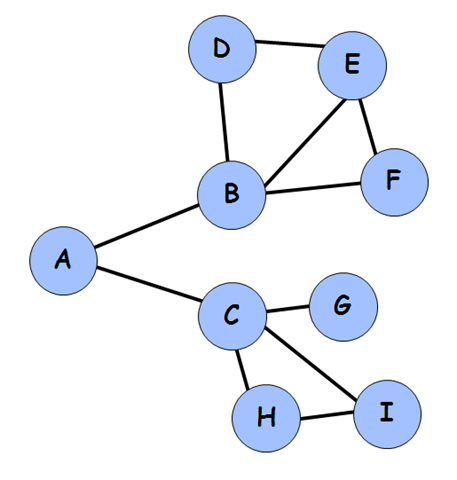 Headhunters are the proverbial networkers – they derive their value from knowing not just many people, but the right people. In particular, headhunters that know people in many places are valuable, because they would then be the only conduit between one group and another. Your network is more valuable the fewer of your contacts are also in contact with each other.
The American sociologist Ronald S. Burt, in his book Structural Holes: The Social Networks of Competition (1992), showed that social capital accrues to those who not only know many people, but have connections across groups. Or, in other words, if everyone had been directly linked, you would have a dense network structure. The fact that we aren’t, means that there are structural holes – hence the term. In the picture to the right, we see a social network of 9 individuals. Person A here derives social capital from being the link two groups that otherwise are only internally connected. A would be an excellent headhunter here. (Much as profits only can be generated if you can locate market imperfections).
LinkedIn is a social networks, indistinguishable from a regular one (i.e., one that is not digitally facilitated) except that you can search across the network, directly up to three levels away, indirectly a bit further. Headhunters like it for this reason, and use it extensively in the early phases of locating a candidate. The trouble is, LinkedIn (not to mention the tendency of more and more people having their CV online on regular websites) makes searching for candidates easy for everyone else as well. In other words – while initially helpful, is the long term result of this searchability that headhunters will no long be necessary.
Search technology – in social networks as well as in general – lowers the transaction cost of finding something. Lower transaction costs favors coordination by markets rather than hierarchy (or, in this case, network). Hence, the value of having a central position in that network should diminish. On the other hand, search technology (in networks in particular) allows you to extend your network, hence increase your social capital. Which effect is stronger remains to be seen.
Anyway, this should make for interesting research. Anyone out there in headhunterland interested in talking to me about their use of these tools?
 Applied Abstractions