Category Archives: Academically speaking

Optimizing Eurekas per second

I am currently trying to figure out how to spend the next semester – I have no courses to teach (for once), plenty of sabbatical time banked up, and a need to get seriously up to speed not just on the current state of tech evolution, but also on putting things in perspective.

So this (hat tip to Bjørn Olstad) podcast was a great inspiration:

This is an extremely wide ranging conversation (more than two hours) and fascinating in many dimensions, not least the way these guys communicate. It reminds me of a passage in Cryptonomicon where Waterhouse (the elder) and Turing communicate by “[…not] talking so much as mentioning certain ideas and then leaving the other to work through the implications. This is a highly efficient way to communicate; it eliminates much of the redundancy […]”. This is done at roughly 1.6x of normal conversation speed and is a delight for someone whose mind tend to wander off when things get too slow.

It also shows that much changes, but much is also the same – for instance, anyone building tools will inevitably discuss the tools they use to build those tools, and I get flashbacks to hearing Eric Raymond discuss key bindings in EMACS or Don Knuth explaining why he built TeK. LLMs, to me, is not so much something revolutionary as the next evolutionary step in our way of interacting with information – we still have work to do on the reward mechanisms, for instance, and we need to figure out a way of asserting scientific authority, so that the most popular and important LLM-based clones will be that of Steven Pinker rather than Steve Bannon. Which actually is kind of important.

Anyway, I really like the vision of building real tutors – and finding the distillation algorithm that matches the explanation to the student, whether you are learning for fun or immediate use.

Digression: As a first-year student, I was given a book of microeconomics, which tried to explain marginal cost through an elaborate example of someone growing tomatoes and selling them, wordily going through pages of text discussing the cost implications of adding another plant, etc. I read and reread it and felt my head swimming, then found a footnote after about 10 pages saying: “For those who have had calculus, the marginal cost is the derivative of the cost function.” I thought “Well, why didn’t you say so right away?” Building a tools that condenses formulaic academic papers into brilliant lunch table explanations – one of the many ideas in this interview – seems to me both a very worthy vision and a method for doing something about the academic research process, where the medium very much has become, if not the message, and least the reward mechanism.

Oh well. But it would be fun to assign this interview for my tech strat course next year – it would go over the head of many students, but for some of them, it would be a great inspiration.

And as a teacher, that is the most you can aspire to, methinks.

That will be all for now.

Reflections on designing a new board competency course

Time for some reflection after having designed and taught the new EMM (Executive Master of Management) course “The Value-Creating Board”, arranged for the first time in the fall of 2024.

The course has been a pleasure to develop and teach. As of today, BI has a number of basic management courses, either alone or in collaboration with institutions such as the Norwegian Confederation of Trade Unions (NHO) or the Norwegian Agricultural Cooperative. With the change in Norwegian law requiring at least 40% of each gender on boards – which will require around 10,000 new, female board members – it was natural to offer a board member course within BI’s Executive Master of Management program, which already has a high proportion of women.

When I develop courses, I do not start from a subject area, but rather from a description of “that”jobs” the student should be able to perform when the course is completed. I wanted to train people who could participate in boards of directors for developing companies, where the board’s role is both to have control over what is happening and to ensure focus on strategy and the future. In pedagogy, this is called ” constructive alignment ” – that is, you develop courses and teaching materials based on what is important for the students to learn (the learning objectives), not based on what you yourself want to lecture on or what is common within the subject area.

There are some things you just can’t avoid in a board course. You need to have something about legal matters – you can never escape board responsibility, and the Companies Act gives the board mandates and tasks that are not to be avoided. As I tell my students: Legal matters are not important until they are, at which point they are all that matters. You also need to have some financial knowledge – it doesn’t help to tell the Bankruptcy Court or the Tax Directorate that you’re not that good at (or interested in) accounting when your equity has evaporated. The rest is a mix of strategy, management and understanding external changes, such as new technology, the almost exploding AI, and ESG reporting and integration).

People who recruit for boards look for two things: management experience and domain knowledge. Both are knowledge areas where you can learn some principles and frameworks through textbooks, but in a board context you have to be able to put things into practice, and then you should have experience using the knowledge, not just reproducing it.

What should the course include?

Given that a board course can be everything and nothing – because the board is responsible for the entire company, without the mandate to go into the details – I chose to define the content of the course by recruiting a great team , who then contributed what they knew best.

The most important person to recruit was definitely Berit Svendsen , who I wanted as a development partner and co-teacher. Berit is the former CEO of Telenor Norway, and as extensive experience as a top manager, board member and chairperson. Berit has been present for most of the course, has contributed with comments, presentations, guidance and not least by letting me draw on her fantastic network. To top it all, she was named Board Chair of the year during the course, which certainly provides unmatched legitimacy!

I found the rest of the team at BI: Thomas Borgen, former CEO of Danske Bank and Board Chair of Kongsberg Digital, contributed his experience and network of contacts both as a senior manager and board member, as well as interesting lectures on the role of the board in strategy execution and risk management. Tore Bråthen, perhaps Norway’s foremost authority on corporate law, contributed his unparalleled legal expertise on board responsibilities, as well as a thorough and reflective perspective on what the new sustainability regulation entails. And Ketil Hveding contributed the basic, but oh so important economic understanding and a perspective on the challenges of small and medium-sized enterprises. Ketil also plays a key role in taking things from BI’s existing management course into this course. I also look forward to taking some of what we – and the students – have worked on and using it to enrich the courses we already have. And not least: I asked nicely to have Mari Berg Henie as the course coordinator – she is not just structured and knowledgeable, but also the koordinator of my other Exec courses, which makes life considerably easier for all involved.

Otherwise, the course has drawn on a great set of guest speakers, both to provide a grounded perspective on what it means to sit on a value-creating board, but also to lay a foundation for further development of the course: It is only when you hear from those who have the shoes on that you know what is important and relevant. (Constructive alignment, again…).

Guest speakers have been:

  • Eivind Reiten, who spoke about the relationship with the owners. Eivind is the chairman of the board of directors of, among others, the Kongsberg group and one of Norway’s most experienced board and business leaders. His perspective on how to relate to owners – he has been widely criticized because he does not want to take dictation from state owners – was particularly interesting because he based his argument not on politics, but on the Norwegian Companies Act, which states that one cannot treat owners differently, and that a claim from an owner, however large, requires a decision from a general assembly. He taught the students that the board has decision-making authority that must be used on behalf of all “stakeholders” of a company, not just owners.
  • Gyrid Skalleberg Ingerø is a former CFO of Telenor and the Kongsberg Group and an extremely experienced board member. She shared her vast experience, very concretely, about what one should and should not do as a valuable board member, down to details about how to stay updated on competitors, industry and technology, how to handle conflicting interests, finances, and risk. Not least, she gave good advice on what to think about if you are offered a board position, including the risks it entails (and which are rarely talked about).
  • Øystein Moan, former CEO and now working chairman of the Visma Group, participated in a webinar from his new home in Switzerland, and spoke about Visma’s development, strategy and his role as working chairman (a role that is quite unusual in Norway, at least for larger companies.) He demonstrated how strategy formulation, learning and execution in a long-term perspective yields results – and provided good perspectives from a corporate strategic view, for instance by having interlocking board memberships for subsidiaries, seen from a board and senior management perspective.
  • Jan-Erik Hareid, founder and managing partner of the early growth stage venture capital company Alliance Venture, spoke about the phases of a company’s development and what you look for in board members in the different phases. He gave the investor perspective, and talked a lot about the importance of recruiting and following up on the people who will actually develop companies.
  • Thomas Evensen is CEO of OrgBrain , which is both a scale-up company (and thus interesting with the board challenges that entails), but also a company providing a digital platform for board work. This gives him first-hand insight into the many dilemmas that boards of directors in small and medium-sized companies have to deal with. And he gave us just that: What is happening in small companies, what do they have to deal with – and how can they recruit and use board members when they have fewer resources (people and money) to do things formally?

Case as term paper

Board work is, in my view, basically problem-solving, best learned through solving many problems and eventually developing an ability to recognize things and apply experience from one problem to another. I use case teaching to teach the students this – but there are not many cases about board work today, either internationally or in Norway. That is why I have chosen to let the students’ project assignments be to create cases – find a business that is facing a challenge where the board must get involved, the problem is complicated, and there are several alternative measures to choose from.

The students have responded very well, I must say, and the case list looks like this:

  • a nationally critical internet and telecom provider that experiences an outage of half of its capacity, possibly due to sabotage, and must figure out the board’s role before, during and after such an event.
  • a small IT services company struggling with growth in a tight financial situation, having to consider both professionalizing the board and management, and using co-ownership to recruit and retain the right resources.
  • a manufacturing company, the cornerstone of a small community, that is experiencing a weak economy and that the corporation that owns them is starting to talk about closing it down.
  • a trading company in the cosmetics and wellness sector that sees new competitors on the horizon, and must consider whether the incumbent board – consisting of old friends – and strategy are appropriate in a world where things are not as easy and pleasant anymore.
  • a family-owned manufacturing company that finds their newly appointed general manager – with extensive experience in the company – resigning his position to move to a newly established competitor, on significantly better terms.
  • a small, independent bank that must consider whether it is possible to continue as a small, independent and local business in a world where new, costly requirements for reporting and resource use (sustainability, anti-money laundering, cybersecurity) are constantly increasing and can more easily be borne by a larger business or through an alliance.
  • A small specialist healthcare provider that must decide whether to be a non-profit or a commercial enterprise, with the organizational and cultural changes that will entail. The situation creates a divided board, and the chairman must navigate a complicated landscape.
  • A water park started as a public-private partnership must balance between the stock market and the cathedral: Should it focus on commercial activity or continue a riskier existence as a primary public welfare service?
  • A company developing electric aircraft must make difficult strategic choices in relation to technology development, investors, and the market situation.
  • A company that provides infrastructure services must consider that some of their employees (and employees within subcontractor companies) may be classified as a security risk because they come from certain countries, or have family members who do. The board and management must consider what measures can be taken, balancing national security considerations with employee rights.
  • A small company that has developed a software system is struggling to get out of the “valley of death,” a situation that is not made any easier by insisting that it is in a scale-up phase without having profitable customers. A potential chairperson must decide whether this is something to invest in or not – and whether to take the position at all.

Exam

In addition to the cases, I have – for the first time in many years – held a “closed book” exam, where students come in, take an exam without aids (they use PCs with a locked browser.) I don’t like traditional exams – they are expensive, the pedagogical effect is debatable, and they introduce possible complications (students who for some reason cannot get to the exam venue, technical difficulties, etc.) and unnecessary stress. However, BI is obliged to maintain some control over whether the students – individually – have actually learned something. Group assignments introduce the possibility of free riders, home exams can be solved by ChatGPT and other large language models.

So, exam it was. I chose to make it with relatively simple and clear questions, about key topics in the course (“What does it mean that equity has been lost, and what is the board’s responsibility in such a situation”). The purpose of an exam is simply to check that the students have understood the main points of the course, not to get bogged down in esoteric details. That is why I also plan for the students to be given a certain number (5, this time) of questions, of which they will have to answer a smaller number (this time 4). This prevents the student from sitting there and not remembering some detail or another and feeling crushed because of it.

Further development

Post-implementation, we have found the course content to be fairly complete – no haven’t found any major gaps in the curriculum or things that absolutely should have been included. If anything, we should perhaps have more about companies in development phases, something about board membership remuneration and opportunities to use stock options and other mechanisms for adjusting goals and incentives for the board and management. We should also have more practical information about sustainability and sustainability reporting, and also something more about how a board should relate to and actually do before and in a bankruptcy situation. Theory-wise, we could have had more about principal-agent issues (in addition to discussions about corporate governance), but the theoretical apparatus there often ends up in situations that are relatively esoteric from a Norwegian perspective.

The most important element will be to develop learning activities that allow students to gain some form of experience of board work and board assessments. I believe in case teaching, and several of the cases described above have the potential to become very good teaching cases, which are in short supply. The process around writing the cases (which I will continue) could be tightened up and better documented.

The course will next be held in the fall of 2025. Some feedback from students is on LinkedIn ( here , here , here and here , for example.)

I’m really looking forward to the next time – and if you need good board members, I have many good candidates to offer!

Two (well, five) book recommendations from 2023

BI’s China office asked me to recommend two books I have read in 2023 to their students, so here goes (with a few honorable mentions):

Flyvbjerg, Bent & Dan Gardner (2023): How Big Things Get Done: The Surprising Factors That Determine the Fate of Every Project, from Home Renovations to Space Exploration and Everything In Between
This excellent book dives into why big projects (in particular, big IT projects) so often fail; i.e., they come in late, more expensive and less complete than they were supposed to be. There are many solutions to this problem, but these authors discuss them carefully and advocates modularization – dividing things up into understandable and managable chunks – as the chief solution. They do so without coming up with any kind of magical method, instead using lots of examples to help you learn. Clearly written, a pleasure to read. Highly recommended!

Miller, Chris (2022): Chip War: The Fight for the World’s Most Critical Technology, Scribner.
This is an excellent book on the evolution of the microchip industry and a great discussion of the interwoven nature of chip production, design and distribution. Shows how a seemingly mundane industry can become not just strategic for business people, but for politicians and, eventually, nations. Also a good illustration of value chain evolution – how profits move from one element of the value chain (design) to others (production, production equipment) and as such a book i can refer to when teaching disruption.

And here are some honorable mentions:

Stephen Wolfram (2023): What is ChatGPT doing … and how does it work?
Very complete explanation on precisely what the title says. As usual, wolfram becomes a bit too detailed sometimes and endlessly promotes his view of the world as algorithm-driven, but this is interesting and, at least for the parts that explains ChatGPT, very informative.

Zeke Faux (2023): Number Go Up: Inside Crypto’s Wild Rise and Staggering Fall
A colleague of min took sick, so I had to teach a couple classes on cryptography, Bitcoin and other fashionable topics. The best book about latest wave turned out not to be (as I expected) Michael Lewis’ Going Infinite (he may have been a bit too close to his subject), but Zeke Faux’ excellent exposé of the feverish rise of various shitcoins and ditto exchanges. The best bits is when he pokes into the slave-labor economics of scam houses, where people are literally kidnapped and enslaved to try to scam you to invest in various things with X’s in their names. Dot-com all over again….and excellent reading for students who think they have discovered the next great thing.

Greimel, Hans and William Sposato (2021): Collision Course: Carlos Ghosn and the Culture Wars That Upended an Auto Empire
This is the story of Carlos Ghosn, who came in as a saviour for Nissan (in the process exposing much of Japan’s unwillingness to communicate or even think about bad news), merging it with Renault, and barely making it out of the country when he ran afoul of culture, conventions and the ministry of something or other. A proper swashbuckling business tale, entertaining and interesting in a thank-God-I-don’t-work-there kind of way. (And yes, not a 2023 book, but I read it that year.)

Video teaching in Shanghai (from Oslo)

Class photo….

I have just finished teaching a four-day course in Strategic Technology and Innovation Management in the BI-Fudan MBA program. This is the second time I teach this way – the last time was in June, where we divided the course up in two two-day modules and everyone was on Zoom. This time about half the students were in the classroom in Shanghai, the rest on videoconference.

Last time I did this, it was an enormous amount of work. This time it was easier – not so much because of routine (though that helps) but because my strategy of building up a library of video classes has helped me reduce the workload in later courses. Normal teaching hours when videoteaching to China is from 0700-1400 Oslo time, which is 1400-2100 for the students. This has meant, for me, that I have had to be in my office (where my fast computer is) at about 0630. So how to bridge the time difference productively?

My strategy has been to have the students work on case analysis in their mornings, and to make 5-minute videos where they present their case analysis. So, when I get up at 0500, I watch their videos, grade and comment on them. Then I get to work, where we start the day with discussing the case. For some of the mornings, I have also asked them to watch videos of presentations (the airline series, in particular). I have also used other videos where the students have either watched them on their computers or on a large screen in the classroom, instead of me talking into the camera. And when I am talking into the camera myself, I have made sure that I capture sound, picture (with a good webcam) and the slides for future videos.

The upshot: I now have about 10 hours of videos which I can reuse. They are decent quality, in English, and will allow me to teach by having the students watch the video, then meet with me to discuss the content. This is much less tiring for both parties – the experience for the students is a presentation (which can be paused, speeded up, and watched when they want to) and a discussion with me, the experience for me is an interesting discussion with prepared and interested students. Having the presentation recorded allows time-shifting, and avoids all kinds of trouble with videoconferencing.

I am a very lazy person, so I have been working very hard to create a library of teaching material which will allow me to work less (or, perhaps, teach more but work the same) in the future.

We’ll see how that works. The students seem to like it. And it would not be China if it did not include a group shot with the professor…

How to do a research interview

Here is a little video I did on how to do a research interview.

30 minutes long, fairly straightforward, I now have the technology sorted that I can make videos like this fairly easy and with decent quality. Might have used a better microphone, but what the heck, it works and only took me about four hours, including writing the outline.

As usual with these things: Caveat emptor. But this approach works for me.

Outline posted below the fold.

Continue reading

Getting dialogue online

Bank in the nineties, I facilitated a meeting with Frank Elter at a Telenor video meeting room in Oslo. There were about 8 participants, and an invited presenter: Tom Malone from MIT.

The way it was set up, we first saw a one hour long video Tom had created, where he gave a talk and showed some videos about new ways of organizing work (one of the more memorable sequences was (a shortened version of) the four-hour house video.) After seeing Tom’s video, we spent about one hour discussing some of the questions Tom had raised in the video. Then Tom came on from a video conferencing studio in Cambridge, Massachusetts, to discuss with the participants.

The interesting thing, to me, was that the participants experienced this meeting as “three hours with Tom Malone”. Tom experienced it as a one hour discussion with very interested and extremely well prepared participants.

A win-win, in other words.

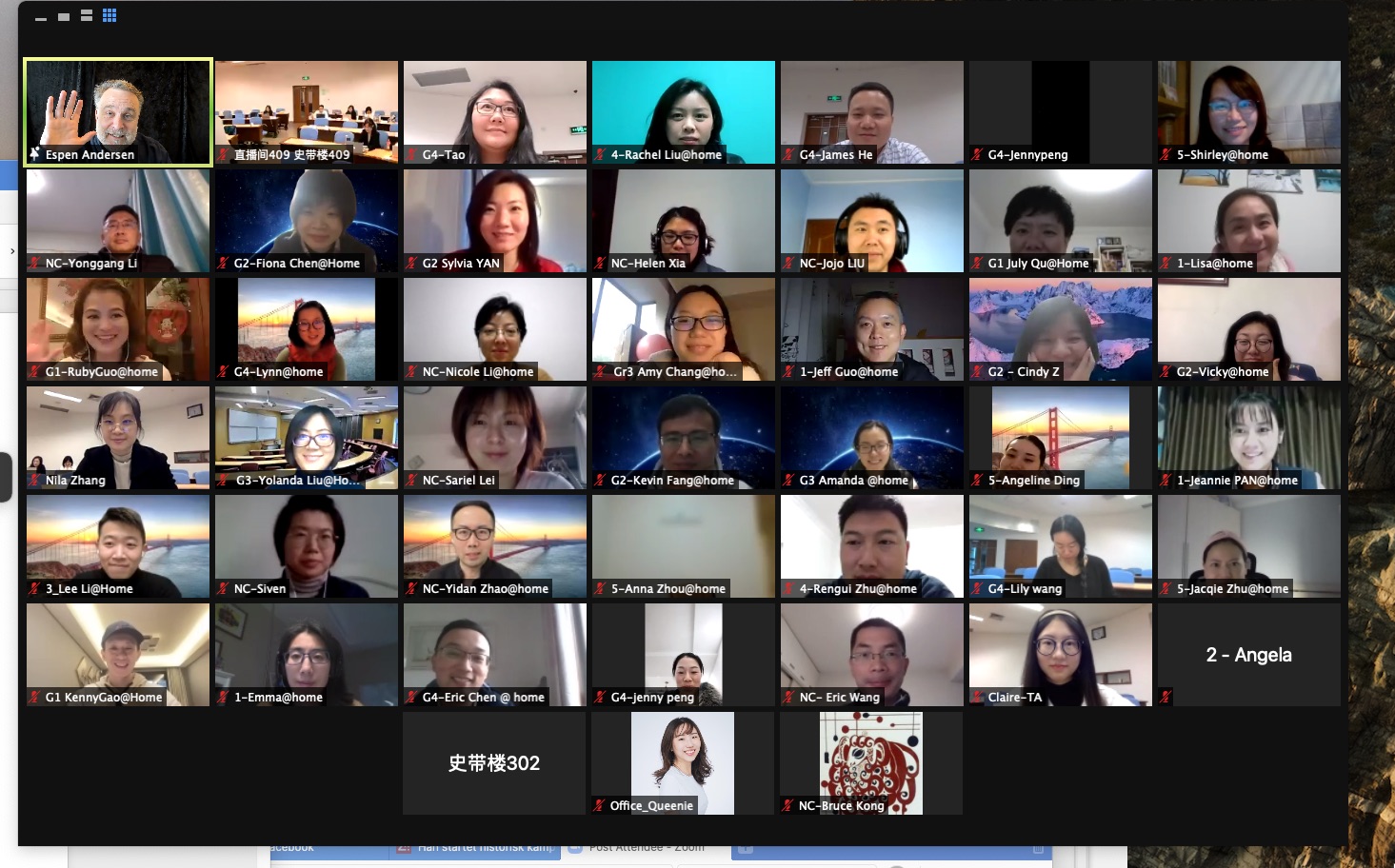
I was trying for something similar yesterday, guest lecturing in Lene Pettersen‘s course at the University of Oslo, using Zoom with early entry, chat, polling and all video/audio enabled for all participants. This was the first videoconference lecture for the students and for three of my colleagues, who joined in. In preparation, the students had read some book chapters and articles and watched my video on technology evolution and disruptive innovations.

For the two hour session, I had set up this driving plan (starting at 2 pm, or 14:00 as we say over here in Europe…):

Image may contain: Espen Andersen, eyeglasses

Leading the discussion. Zoom allows you to show a virtual background, so I chose a picture of the office I would have liked to have…

14:00 – 14:15 Checking in, fiddling with the equipment and making sure everything worked. (First time for many of the users, so have the show up early so technical issues don’t eat into the teaching time.)
14:15 – 14:25 Lene introduces the class, talks about the rest of the course and turns over to Espen (we also encouraged the students to enter questions they wanted addressed in the chat during this piece)
14:25 – 14:35 Espen talking about disruption and technology-driven strategies.
14:35 – 14:55 Students into breakout rooms – discussing whether video what it would take for video and digital delivery to be a disruptive innovation for universities. (Breaking students up into 8 rooms of four participants, asking them to nominate a spokesperson to take notes and paste them into the chat when they return, and to discuss the specific question: What needs to happen for COVID-19 to cause a disruption of universities, and how would such a disruption play out?
14:55 – 15:15 Return to main room, Espen sums up a little bit, and calls on spokesperson from each group (3 out of 8 groups) based on the notes posted in the chat (which everyone can see). Espen talks about the Finn.no case and raises the next discussion question.
15:15 – 15:35 Breakout rooms, students discuss the next question: What needs to happen for DNB (Norway’s largest bank) to become a data-driven, experiment-oriented organization like Finn.no? What are the most important obstacles and how should they be dealt with?
15:35 – 15:55 Espen sums up the discussion, calling on some students based on the posts in the chat, sums up.
15:55 – 16:00 Espen hand back to Lene, who sums up. After 16:00, we stayed on with colleagues and some of the students to discuss the experience.

zoom dashboard

The dashboard as I saw it. Student names obscured.

Some reflections (some of these are rather technical, but they are notes to myself):

  • Not using Powerpoint or a shared screen is important. Running Zoom in Gallery view (I had set it up so you could see up to 49 at the same time) and having the students log in to Zoom and upload a picture gave a feeling of community. Screen and/or presentation sharing breaks the flow for everyone – When you do it in Zoom, the screen reconfigures (as it does when you come back from a breakout room) and you have to reestablish the participant panel and the chat floater. Instead, using polls and discussion questions and results communicated through the chat was easier for everyone (and way less complicated).
  • No photo description available.

    Satisfactory results, I would say.

    I used polls on three occasions: Before each discussion breakout, and in the end to ask the students what the experience was like. They were very happy about it and had good pointers on how to make it better

  • We had no performance issues and rock-steady connection the whole way through.
  • It should be noted that the program is one of the most selective in Norway and the students are highly motivated and very good. During the breakout sessions I jumped into each room to listen in on the discussion (learned that it was best to pause recording to avoid a voice saying “This session is being recorded” as I entered. The students were actively discussing in every group, with my colleagues (Bendik, Lene, and Katja) also participating. I had kept the groups to four participants, based on feedback from a session last week, where the students had been 6-7 and had issues with people speaking over each other.
  • Having a carefully written driving plan was important, but still, it was a very intense experience, I was quite exhausted afterwards. My advice on not teaching alone stands – in this case, I was the only one with experience, but that will change very fast. But I kept feeling rushed and would have liked more time, especially in the summary sections, would have liked to bring more students in to talk.
  • I did have a few breaks myself – during the breakout sessions – to go to the bathroom and replenish my coffee – but failed to allow for breaks for the students. I assume they managed to sneak out when necessary (hiding behind a still picture), but next time, I will explicitly have breaks, perhaps suggest a five minute break in the transition from main room to breakout rooms.

Conclusion: This can work very well, but I think it is important to set up each video session based on what you want to use it for: To present something, to run an exercise, to facilitate interaction. With a small student group like this, I think interaction worked very well, but it requires a lot of presentation. You have to be extremely conscious of time – I seriously think that any two-hour classroom session needs to be rescheduled to a three hour session just because the interaction is slower, and you need to have breaks.

As Winston Churchill almost said (he said a lot, didn’t he): We make our tools, and then our tools make us. We now have the tools, it will be interesting to see how the second part of this transition plays out.

Dealing with cheating

At BI Norwegian Business School, we are (naturally and way overdue, but a virus crisis helps) moving all exams to digital. This means a lot of changes for people who have not done that before. One particular anxiety is cheating – normally not a problem in the subjects I teach (case- and problem oriented, master/executive, small classes) but certainly is an issue in large classes at the bachelor level, where many answers are easily found online, the students are many, and the subjects introductory in nature.

Here are some strategies to deal with this:

  • Have an academic honesty policy and have the students sign it as part of the exam. This to make them aware of they risk if they cheat.
  • Keep the exam time short – three hours at the max – and deliberately ask more questions than usual. This makes for less time for cheating (by collaborating) because collaboration takes time. It also means introducing more differentiation between the students – if just a few students manage to answer all questions, those are the A candidates. Obviously, you need to adjust the grade scale somewhat (you can’t expect all to answer everything) and there is an issue of awarding students that are good at taking exams at the expense of deep learning, but that is the way of all exams.
  • Don’t ask the obvious questions, especially not those asked on previous exams. Sorry, no reuse. Or perhaps a little bit (it is a tiring time.)
  • Tell the students that all answers will be subjected to an automated plagiarism check. Whether this is true or not, does not matter – plagiarism checkers are somewhat unreliable, have many false positives, and require a lot of afterwork – but just the threat will eliminate much cheating. (Personally, I look for cleverly crafted answers and Google them, amazing what shows up…).
  • Tell the students that after the written exam, they can be called in for an oral exam where they will need to show how they got their answers (if it is a single-answer, mathematically oriented course) or answer more detailed questions (if it is a more analysis- or literature oriented course). Who gets called in (via videoconference) will be partially random and partially based on suspicion. Failing the orals results in failing the course.
  • When you write the questions: If applicable, Google them, look at the most common results, and deliberately reshape the questions so that the answer is not one of those.
  • Use an example for the students to discuss/calculate, preferably one that is fresh from a news source or from a deliberately obscure academic article they have not seen before.
  • Consider giving sub-groups of students different numbers to work from – either automatically (different questions allocated through the exam system) or by having questions like “If your student ID ends in an even number (0,2,4,6,8) answer question 2a, otherwise answer question 2b” (use the student ID, not “birthday in January, February, March…” as this will be the only marker you have.) The questions may have the same problem, but with small, unimportant differences such as names, coefficients or others. This makes it much harder to collaborate for the students. (If you do multiple questions in an electronic context, I assume a number of the tools will have functionality for changing the order of the questions – it would, frankly, astonish me if they did not – but I don’t use multiple choice myself, so I don’t know.
  • Consider telling the students they will all get different problems (as discussed above) but not doing it. It still will prevent a lot of cheating simply because the students believe they all have different problems and act accordingly.
  • If you have essay questions, ask the students to pick a portion of them and answer them. I do this on all my exams anyway – give the students 6 questions with short (150 words) answers and ask them to pick 4 and answer only those, and give them 2 or 3 longer questions (400 words or so) and ask them to answer only one. (Make it clear that answering them all will result in only the first answered will be considered.) Again, this makes cheating harder.

Lastly: You can’t eliminate cheating in regular, physical exams, so don’t think you can do it in online exams. But you certainly can increase the disincentives to do so, and that is the most you can hope for.

Department for future ideas
I have always wanted to use machine learning for grading exams. At BI, we have some exams with 6000 candidates writing textual answers. Grading this surely must constitute cruel and unusual punishment. With my eminent colleague Chandler Johnson I tried to start a project where we would have graders grade 1000 of these exams, then use text recognition and other tools, build an ML model and use that to grade the rest. Worth an experiment, surely. The project (like many other ideas) never took off, largely because of difficulties of getting the data, but perhaps this situation will make it possible.

And that would be a good thing…

A teaching video – with some reflections

Last Thursday, I was supposed to teach a class on technology strategy for a bachelor program at the University of Oslo. That class has been delayed for a week and (obviously) moved online. I thought about doing it video conference, but why not make a video, ask the students to see it before class? Then I can run the class interactively, discussing the readings and the video rather than spending my time talking into a screen. Recording a video is more work, but the result is reusable in other contexts, which is why I did it in English, not Norwegian. The result is here:

To my teaching colleagues: The stuff in the middle is probably not interesting – see the first two and the last five minutes for pointers to teaching and video editing.

For the rest, here is a short table of contents (with approximate time stamps):

  • 0:00 – 2:00 Intro, some details about recording the video etc.
  • 2:00 – 27:30 Why technology evolution is important, and an overview of technology innovation/evolution processes
    • 6:00 – 9:45 Standard engineering
    • 9:45 – 12:50 Invention
    • 12:50 – 15:50 Structural deepening
    • 15:50 – 17:00  Emerging (general) technology
      • 17:00 – 19:45 Substitution
      • 19:45 – 25:00 Expansion, including dominant design
      • 25:00 – 27:30 Structuration
  • 27:30 – 31:30 Architectural innovation (technology phases)
  • 31:30 –  31:45 BREAK! (Stop the video and get some coffee…)
  • 31:45 – 49:40 Disruption
    • 31:45 – 38:05 Introduction and theory
    • 38:05 – 44:00 Excavator example
    • 44:00 – 46:00 Hairdresser example
    • 47:00 – 47:35 Characteristics of disruptive innovations
    • 47:35 – 49:40 Defensive strategies
  • 49:40 – 53:00 Things take time – production and teaching…
  • 53:00 – 54:30 Fun stuff

This is not the first time I have recorded videos, by any means, but it is the first time I have created one for “serious” use, where I try to edit it to be reasonably professional. Some reflections on the process:

  • This is a talk I have given many times, so I did not need to prepare the content much – mainly select some slides. for a normal course, I would use two-three hours to go through the first 30 minutes of this video – I use much deeper examples and interact with the students, have them come up with other examples and so on. The disruption part typically takes 1-2 hours, plus at least one hour on a specific case (such as the steel production). Now the format forces me into straight presentation, as well as a lot of simplification – perhaps too much. I aim to focus on some specifics in the discussion with the students.
  • I find that I say lots of things wrong, skip some important points, forget to put emphasis on other points. That is irritating, but this is straight recording, not a documentary, where I would storyboard things, film everything in short snippets, use videos more, and think about every second. I wanted to do this quickly, and then I just have to learn not to be irritated at small details.
  • That being said, this is a major time sink. The video is about 55 minutes long. Recording took about two hours (including a lot of fiddling with equipment and a couple of breaks). Editing the first 30 minutes of the  video took two hours, another hour and a half for the disruption part (mainly because by then I was tired, said a number of unnecessary things that I had to remove.)
  • Using the iPad to be able to draw turned out not to be very helpful in this case, it complicated things quite a bit. Apple’s SideCar is still a bit unpredictable, and for changing the slides or the little drawing on the slides I did, a mouse would have been enough.
  • Having my daughter as audience helps, until I have trained myself to look constantly into the camera. Taping a picture of her or another family member to the camera would probably work almost as well, with practice. (She has heard all my stories before…)
  • When recording with a smartphone, put it in flight mode so you don’t get phone calls while recording (as I did.) Incidentally, there are apps out there that allow you to use the iPhone as a camera connected to the PC with a cable, but I have not tested them. It is easy to transfer the video with AirPlay, anyway.
  • The sound is recorded in two microphones (the iPhone and a Røde wireless mic.) I found that it got “fatter” if I used both the tracks, so I did that, but it does sometime screw up the preview function in Camtasia (though not the finished product). That would also have captured both my voice and my daughter’s (though she did not ask any questions during the recording, except on the outtakes.)
  • One great aspect of recording a video is that you can fix errors – just pause and repeat whatever you were going to say, and the cut it in editing. I also used video overlays to correct errors in some slides, and annotations to correct when I said anything wrong (such as repeatedly saying “functional deepening” instead of “structural deepening”.) It does take, time, however…

My excellent colleague Ragnvald Sannes pointed out that this is indicative of how teaching will work in the future, from a work (and remuneration) perspective. We will spend much more time making the content, and less time giving it. This, at the very least, means that teachers can no longer be paid based on the number of hours spent teaching – or that we need to redefine what teaching means…

Five tips for better video teaching

In these viral times, a lot of universities will need to switch to video teaching, and for many teachers, this is a new experience. Here is a short (and fast) video I made with five – non-technical – tips for better video conferencing and teaching.

To sum it up:

1. Sound is more important than picture.
2. Look into the camera!
3. Don’t make the obvious mistakes: Background, lighting, and clothing.
4. Be lively! The medium consumes energy, you need to compensate.
5. Get to know the tools.

Good luck!

Clay in memoriam

IMG_2252Clayton M. Christensen, 1952-2020 (WSJ, NYT)

You think of many things when a friend dies.

When I was about 16, I went into the forest with some friends to watch the 50-km cross-country race at the Holmenkollen ski festival. One of the stars that year was Juha Mieto, an enormous (more than two meter) Finn who had to be careful with his strength, as he tended to break his ski poles. One of my friends decided to try to keep up with Mieto, just to see how long he could do it. My friend was a reasonably good skier, and managed to keep up for about 300 meters. Mieto, of course, kept going for 50 kilometers.

Sometimes I had the same feeling when interacting with Clay. Not because he was an imposing giant in the physical sense, but because of his incredible work capacity and ability to follow things through. I felt I could keep up with him for a while, enjoy it – and he would then go on, endlessly doing so much more than I was capable of. Clay was so many things: A famous scholar, a life-changing teacher, an adviser, a church leader, husband, father of five – and seemed to do it, if not effortlessly, at least conclusively, with a degree of self-discipline hard to imagine. For me, he was a friend.

We met as students at Harvard Business School in 1990 (he started one year before me), in an Organizational Psychology course with 140 papers on the reading list. Doing that alone just wasn’t possible, so we formed study groups of 5-6 people, writing summaries of papers for each other and occasionally meeting to discuss them before class. I still have the notes. Clay was different in that he added vry observations to his summaries, showing an ability to reflect and a degree of irreverence that wasn’t much visible elsewhere.

We became friends of a sort, spending much time studying in the cramped basement of the doctoral student house at HBS. Like me, Clay had a family and biked to work, but he would be in much earlier than me. After lunch, he would take a nap in his carrel, lying on the floor with his feet on the office chair. I remember him coming to school one day, shaking his head: His son had dunked a basketball – and he was twelve years old.

Clay’s research was on the evolution of technologies, specifically on generations of hard disks, a project that eventually became the The Innovator’s Dilemma. I got to see how his theory developed through seminars, papers and discussions, including some blind alleys. I was in a different field, but was more interested in technology than most of my peers and think I was one of the people outside his department who early on thought his work interesting and understood the implications, though I do not think I contributed in any meaningful fashion aside from encouragement.

Clay graduated in record time and became a professor, and I needed a friendly face on my thesis committee – so I asked him. Eventually I graduated and moved back to Norway, but kept my consulting job in Boston and travelled there quite often. Clay became famous, and, cashing in a favor, I invited him over to Oslo to speak at BI Norwegian Business School. He came in January, on his way home from the World Economic Forum in Davos. It was cold and dark and he gave a lecture the audience referred to as “life-changing”. I asked him if there was anything he wanted to do in Norway. There was one town – Drammen – he had always wanted to visit, since his great grandfather had been repeatedly arrested there for being a Mormon missionary. (To put this in context: Coming to Oslo and wanting to see Drammen is equal to landing in New York and asking to see New Jersey.) So we went there, in my colleague Øystein Fjeldstad’s car. It was foggy and bitterly cold and Drammen was every bit as dreary as you can imagine. We went back to Oslo, dropped off Clay at the luxurious hotel we had booked for him and urged him to try the gourmet restaurant. When his expenses came in, it turned out he had gone to McDonald’s. Our CFO solemnly informed me that I was free to invite this guy anytime I wanted.

In 2007 I thought I had come up with a way to redeem myself and my country and arranged a “Disruptive Cruise” – a weeklong trip on Hurtigruten with Clay’s family. The idea was to create a nice experience for execs from interesting companies and for Clay to have a great vacation with his family and some good discussions. Economically it just did not work – a combination of an economic downturn, Norwegian executives’ unwillingness to spend a week away during what for them was summer vacation, and my listless performance as a salesperson meant that the whole thing became a highly personal, rather low-budget thing – but Clay and his large family liked it. Clay spent much of the time typing on his computer, but found time to see the midnight sun from the ship’s hot tub, and experience both the bridge and the machine room (where passengers are not normally allowed), in addition, of course, to the coasts and mountains of western and northern Norway.

IMG_2679

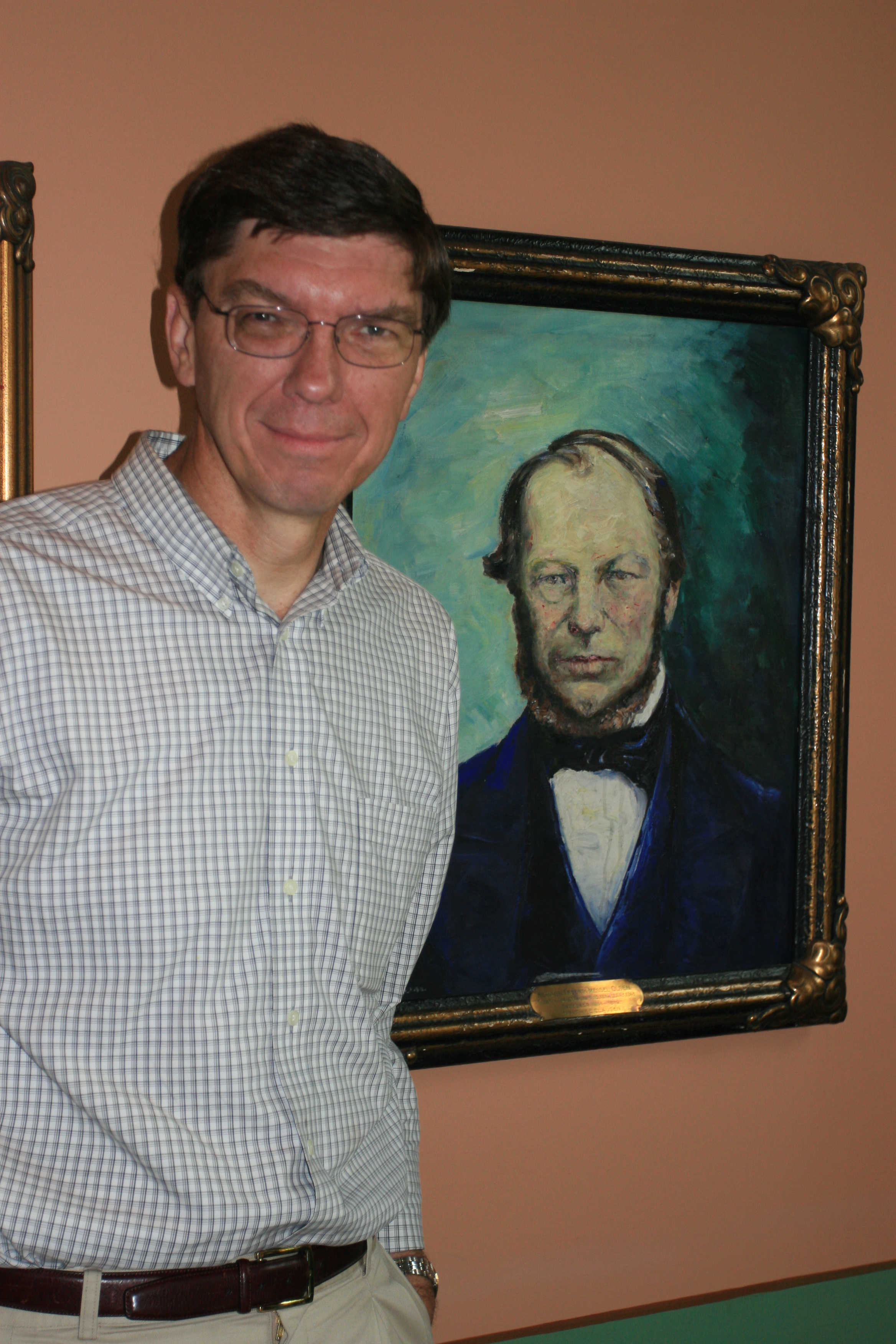
My partner in crime for this trip was Trond Østgaard, who was chairman of the Hurtigruten Appreciation Society as well as a prominent citizen of Drammen. Hence, Clay and family could visit Drammen in style this time, being shown around the old City Hall (where his great-grandfather had been imprisoned) by the Vice-Mayor and have his photograph taken next to the portrait of the sheriff who had done the arrests.

We stayed friends, though we did not spend much time together. I would occasionally pop into his office at HBS, where we swapped anecdotes and talked about technology. I tended to come up with examples, he would think about how they would play out. We would discuss processor modularity, telecommunications competition, hospital management and (a lot) the coming disruption of business schools. Again, I don’t think I contributed much to his research, aside from coming up with a few examples and suggesting ways to communicate things (not that Clay needed any help there). Perhaps my main contribution was to introduce him to Øystein Fjeldstad (the third guy in the picture on top here), whose “value configurations” made it into a couple of Clay’s articles and books. The way to talk to Clay was not to explain things, but to state examples and wait (not long) for him to work out the consequences himself.

I would occasionally see him when he swung by Oslo for a talk, once or twice being the MC myself. But Clay was incredibly busy with audiences constantly demanding his disruption stories (“I am becoming my own theory here,” he would comment, ruefully), I stopped travelling so much to the US, so we saw less of each other. In one sense we were very different: Clay was deeply religious, I am an atheist, and I could never reconcile his scientific mind with his religious views. We talked about it on a few occasions, agreeing to disagree. Mostly, we would talk about our families and our job experiences, stepping back and seeing what it all meant. For all his fame, Clay was invariably down to earth, a great support for me when two of my children became seriously ill – and I believe I played at least a small part like that for him, too. Clay’s health was not good – diabetes, cancer, heart problems and a stroke that made it difficult for him to form words, but he never complained and kept working – a bit much if you ask me (and his family).

I learned a lot from Clay, and he (politely) said he had learned from me. I learned about how to think critically and clearly, and how to be principled and persistent when you believe in your analysis. In my career this has helped me understand that I should build my career on what I am good at and what I can and want to do, not what the organisations I work for see as the correct career path. His way of thinking has enabled me on a number of occasions to listen to what job the customer want done – not a very intellectual concept, but one that is surprisingly effective – and apply that both to offerings I have developed myself and to my analyses of various companies and industries. In my teaching, he has influenced me enormously – when I finally felt secure enough to teach technology in a business school through cases, and cases only, it was his course I started with.

I keep judging my ideas up against what he would have thought. Just a few days ago, I discussed an idea for a paper with Chandler Johnson, a colleague at BI: Is machine learning disruptive to traditional management research (or traditional research in general)? We swapped some ideas back and forth, and I suggested we type it up as a short outline and send it off to Clay to hear what he thought about it.

And now he is no more.

In addition to his management books, Clay wrote and spoke about how to evaluate your life – and said that in posterity, he would not be judged for being a famous business school professor, but for how he had helped other people.

I don’t believe in an afterlife, but I do think that as a person, you exist as long as somebody remembers you, how you were, and what you did for them. For me, at least, Clay will exist for the rest of my life, and, I am sure, for many of my students.

And my thoughts go to Christine, and to her and Clay’s children and grandchildren, who have lost infinitely more than the rest of us have and for whom that form of remembrance is a small consolation – but hopefully, a consolation nevertheless.

How to write a teaching case

Since I sometimes give classes on how to do case teaching and have written a book on the subject with Bill Schiano, I am sometimes asked how to write a teaching case. The following blog post is a quick tips & tricks collection (essentially an update of this post.)

Why are you writing this case?
First and foremost: Cases are written for a teaching purpose – and to write a teaching case, you need to have a teaching objective in mind. It is not enough to have an interesting company. Even the best company story needs to have a pedagogical point, a theory or dilemma to illustrate. So don’t write a teaching case just because you happen to know someone in a really interesting company – it does need to be a good story, but it also need to have a purpose.

The standard outline
Cases – particularly the standard HBS case – follow an outline that can seem rather trite, but which is very effective. It is something like this:

  • 0.5 page: Intro: The protagonist is introduced, typically pondering a question of some importance. The idea is to tell the students from which perspective the case is written, to set the scene – and that is all there is to it.
  • 1 – 1.5 pages: Description of the company – not the whole history, but the relevant details, explaining what the company is doing, how they make their money. Most companies are to a very large degree formed by their history, so the relevant parts need to be told.
  • 1 page: Industry. Companies exist within a context, and you need to set it. Explain the industry, its evolution, and the company’s position within it. Do it succinctly, but leave more detail in than what is strictly necessary.
  • 1 – 5 pages: Specific issue. This is the meat of the case, the issue at hand, the story to ponder. Make sure you tell it logically and cooly, not leaving anything out, but also conveying the complexity of the situation.
  • 0.5 page: Conclusion, typically with the protagonist wondering what to do, often with some sort of event (board meeting, etc.) where he or she has to present a solution to the problem.

Most cases are just that – one case. You can have a B case and even a C case, but keep them short, since they have to be handed out and read in class. The B case should explain what the company did and perhaps introduce a new problem, the C case, if necessary, should bring some sort of closure, explaining what eventually happened. In my experience, it is very hard to get discussion after a C case – the students become exhausted. As a novice case writer, especially if you are writing about a company with a long history, it can be tempting to create a long string of small cases, but in practice this seldom works well – for one thing, it forces the discussion into a very predictable path.

The no-nos
No theory. A good case should be a description of an interesting situation, frequently a decision point – and nothing else. This means that there should be no theory and no discussion of the case in the case itself – so do not characterise an innovation as disruptive or say that something is an example of an agency problem (unless it is said by one of the protagonists). Save that for the teaching note, or write a separate academic article about it. Not only does this make the case more realistic, it also means it can be used for more purposes than the one initially envisioned. This can be quite challenging for the traditional academic writer – but it is actually good practice to only present the facts (though, of course, which facts you choose to present constitute a discussion of sorts).

No hero, no villain. When teaching students how to analyze a case, I always start by saying that for most business situations, if is useful to begin the analysis with the assumption that people are not stupid and not evil. Consequently, when you write a case, make sure it has no heroes and no villains. If a case has a clear-cut hero or villain, it is a sign that you have not done enough research. Write things so that the students can see the issue from many perspectives.

No judgement. I frequently find, when reading prospective teaching cases – especially if written with the help of a communications department – that judgements tend to be embedded in the text itself, though it is supposed to be as neutral and purely descriptive as possible. So, do not write that a company is “leading”. Instead, describe what they do, perhaps adding a bit of industry numbers for comparison. Let the decision about how leading the company is be up to the student. For example, do not write “Smith was a highly accomplished manager, leading a successful technology implementation.” Instead, write “Smith, at 29, was promoted to be the youngest vice president in company history after conceiving and overseeing the introduction of the first machine learning platform in the industry.”

No consultingese. Be very careful of weasel terms – is the company embarking on a strategic alliance or merely collaborating with another company for a specific purpose? (As a friend of mine said: “I buy all my socks at Marks and Spencer. That does not mean I have a strategic alliance with them.”) Avoid terms that are not well defined, and be precise in your language. Remember, a teaching case has the longest legs when it describes a human situation (since humans change slowly) – so do not not tie the narrative to specifically to a technology. (See the example of Fabritek below.) That being said, I quite often use old technology cases. If the students complain, ask them to take out a pen and change the dates mentioned to last year, update the technology capabilities accordingly – and see if anything else changes.

Dramatic structure
A really well written case has dramatic structure – there is a beginning, a middle that builds up the story, and a really compelling issue at the end. The best cases are almost like detective stories, where you have to dig deep into the analysis to find surprising and sometimes counter-intuitive conclusions. One example of a “detective story” case is Fabritek 1992*, a very old (first published 1969, rewritten by Jan Hammond) case about a quality control issue in a small mechanical workshop. (Hat tip to Robert D. Austin, eminent case teacher, for making me aware of this case and showing me how to teach it.) The case is excellent because it starts with the company (strategic level), proceeds to describe a new situation and a new process (organizational or business logic level) and then introduces the problem (operational level.) Analyzing the operational details leads to one conclusion, which then can be discussed in terms of the organization and its business logic, which can then be placed into a strategic context. The case is excellent because it allows links between these levels – and also teaches the students that the devil indeed resides in the details, and that you as a manager better be very close to how the business you are leading works and makes money.

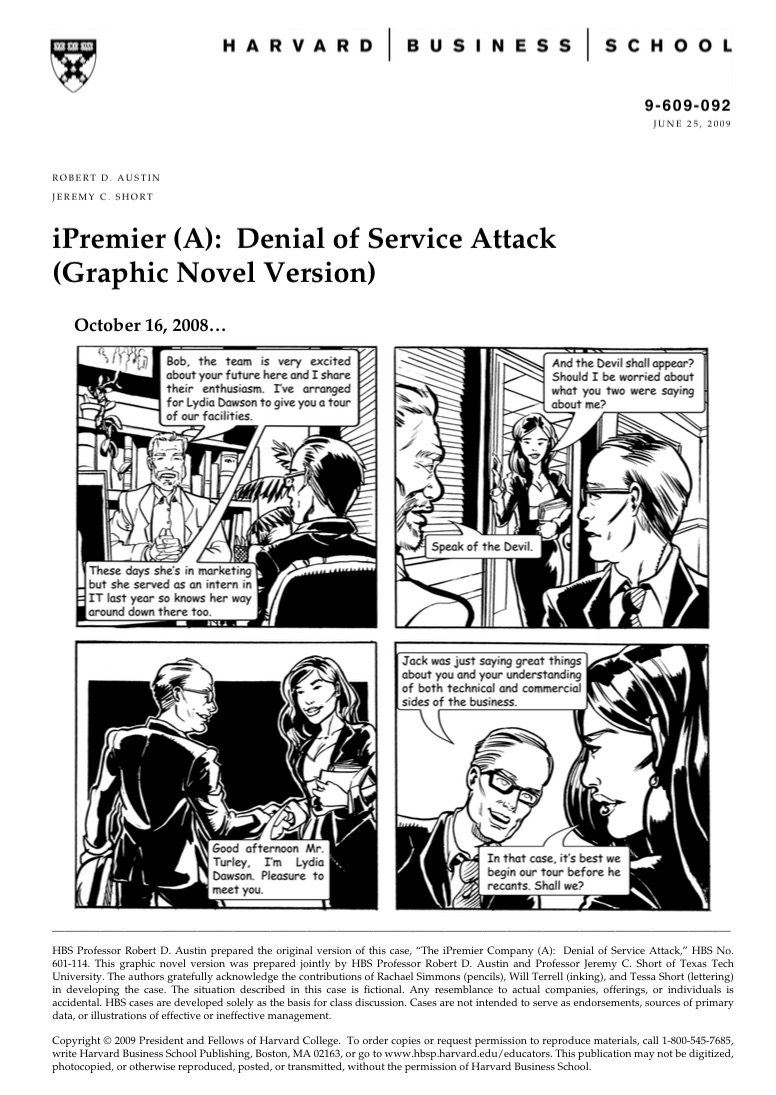
iPremier-front-pageA second case which shows quality and innovation is iPremier, written by Robert D. Austin and Jeremy C. Short, the first and only graphic novel (cartoon) case I am aware of. The story is about a small online gift company being attacked by hackers, exposing glaring gaps in their security procedures and forcing managers at various levels to make some really hard decisions. The graphic format is excellent in making the various characters real (though they, on average, tend to be way too good-looking for a normal business situation), illustrates technical issues in a way that is very understandable even by non-technology students, and has a cracking good storyline with a B and a C case. I like to introduce a few technical cases in my courses because, well, I don’t think there is enough technology in business schools, and this cases answers very well because it illustrates that certain technical decisions very much require top management attention – ignore (or mindlessly delegate) technology understanding and responsibility at your peril. The graphic format also provides a welcome break from the standard case verbiage, which can be a trifle dour on occasion.

Details, details, details!
Research cases – the kind that is published in refereed journals – tend to be written from a very specific viewpoint, and only facts pertaining to that perspective is included, often in a very abstract format. A teaching case is the direct opposite: It needs lots of details, frequently made available as exhibits (graphs, pictures, documents, tables, etc.) placed at the end, after the main text. A teaching case writer, when visiting a company to write about it, needs to notice the small details, much like a really good journalist does. I tell my students that they should prepare each case so well that they feel like they have worked in the case company – and to allow them to do that, you need to provide the operational details necessary. (Incidentally, having more details than strictly necessary has the added benefit of making the case realistic – in the real world, you have to decide what is important and what is not.)

Doing it – and reading about it.
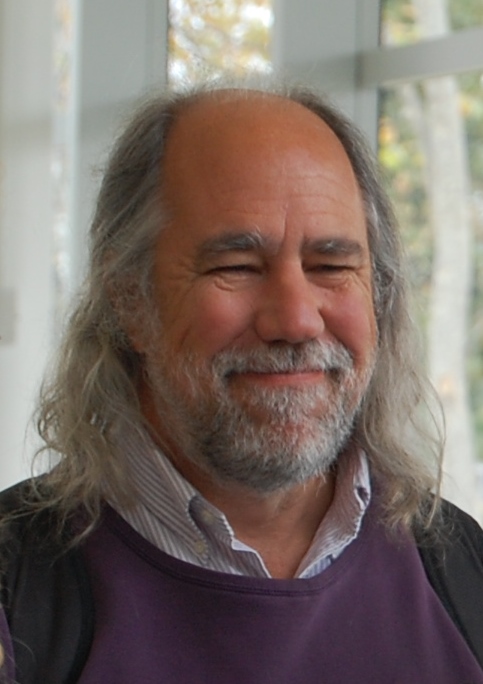
grandongillI am not aware of many books about how to write a good teaching case, with one exception: Grandon Gill (pictured), professor at University of South Florida and an excellent case teacher, has written a book called Informing with the case method, which is available for free download in PDF, MOBI and EPUB format from his web site. It has lots of details, tips and tricks, not just about case writing, but also about case teaching and course planning. (For the latter, of course, I am duty bound to recommend Bill Schiano’s and my book Teaching with Cases: A Practical Guide.)

Last but definitely not least: Don’t underestimate how much work writing a proper business case is. Getting the details right, describing the dramatis personae, and making the storyline compelling is quite a challenge, in many dimensions different from the traditional academic article. On the other hand, should you get it right, you will have a very effective teaching tool for many years to come.

Good luck!

Summer reading for the diligent digital technology student

eivindgEivind Grønlund, one of my students at the Informatics: Digital Business and Leadership program at the University of Oslo sent me an email asking about what to read during the summer to prepare for the fall.

Well, I don’t believe in reading textbooks in the summer, I believe in reading things that will excite you and make you think about what you are doing and slightly derail you in a way that will make you a more interesting person when Fall comes. In other words, read whatever you want.

That being said, the students at DigØk have two business courses next year – one on organization and leadership, one on technology evolution and strategy. Both will have a a focus on basics, with a flavor of high tech and the software business. What can you read to understand that, without having to dig into textbooks or books that may be on the syllabus, like Leading DigitalThe Innovator’s SolutionEnterprise Architecture as Strategy, or Information Rules?

Here are four books that are entertaining and wise and will give you an understanding of how humans and technology interact and at least some of the difficulties you will run into trying to manage them – but in a non-schoolbook context. Just the thing for the beach, the mountain-top, the sailboat.

  • 816Neal Stephenson: Cryptonomicon. The ultimate nerd novel. A technology management friend of mine re-reads this book every summer. It involves history, magic reality (the character of Enoch Root), humor, startup lore, encryption and, well, fun. Several stories in one: About a group of nerds (main protagonist: Randy Waterhouse) doing a startup in Manila and other places 1999, his grandfather, Randall P. Waterhouse, running cryptographic warfare against the Germans and Japanese during WWII, and how the stories gradually intersect and come together towards the end. The gallery of characters is hilarious and fascinating, and you can really learn something about startups, nerd culture, programming, cryptography and history along the way. Highly recommended.
  • 7090Tracy Kidder: The Soul of a New Machine. This 1981 book describes the development process of a Data General minicomputer as a deep case study of the people in it. It could just as well have been written about any really advanced technology project today – the characters, the challenges, the little subcultures that develop within a highly focused team stretching the boundaries for what is possible. One of the best case studies ever written. If you want to understand how advanced technology gets made, this is it.
  • 24113Douglas Hofstadter: Gödel, Escher, Bach. This book (aficionados just call it GEB) was recommended to me by one of my professors in 1983, and is responsible for me wanting to be in academia and have time and occasion to read books such as this one. It is also one of the reasons I think The Matrix is a really crap movie – Hofstadter said it all before, and I figured out the plot almost at once and thought the whole thing a tiresome copycat. Hofstader writes about patterns, abstractions, the concept of meta-phenomena, but mostly the book is about self-referencing systems, but as with any good book that makes you think it is breath-taking in what it covers, pulling together music, art, philosophy and computer science (including a bit on encryption, always a favorite) and history. Not for the faint-hearted, but as Erling Iversen, my old boss and an extremely well-read man, said: You can divide techies into two kinds: Those who have read Hofstadter, and those who haven’t.
  • 34017076Tim O’Reilly: WTF? What’s the Future and Why It’s Up to Us. Tim is the founder of O’Reilly and Associates (the premier source of hands-on tech books for me) and has been a ringsider and a participant in anything Internet and digital tech since the nineties. This fairly recent book provides a good overview of the major evolutions and battles during the last 10-15 years and is a great catcher-upper for the young person who has not been been part of the revolution (so far.)

And with that – have a great summer!

The history of software engineering

grady_booch2c_chm_2011_2_cropped

The History of Software Engineering
an ACM webinar presentation by
ACM Fellow Grady Booch, Chief Scientist for Software Engineering, IBM Software
(PDF slides here.)

Note: These are notes taken while listening to this webinar. Errors, misunderstandings and misses aplenty…

(This is one of the perks of being a member of ACM – listening to legends of the industry talking about how it got started…)

Trust is fundamental – and we trust engineering because of licensing and certification. This is not true of software systems – and that leads us to software engineering. Checks and balances important – Hammurabi code of buildings, for instance. First licensed engineer was Charles Bellamy, in Wyoming, in 1907, largely because of former failures of bridges, boilers, dams, etc.

Systems engineering dates back to Bell labs, early 1940s, during WWII. In some states you can declare yourself a software engineer, in others licensing is required, perhaps because the industry is young. Computers were, in the beginning, human (mostly women). Stibitz coined digital around 1942, Tukey coined software in 1952. 1968-69 conference on software engineering coined the term, but CACM letter by Anthony Oettinger used the term in 1966, but the term was used before that (“systems software engineering”), most probably originated by Margaret Hamilton in 1963, working for Draper Labs.

Programming – art or science? Hopper, Dijkstra, Knuth, sees them as practical art, art, etc. Parnas distinguished between computer science and software engineering. Booch sees it as dealing with forces that are apparent when designing and building software systems. Good engineering based on discovery, invention, and implementation – and this has been the pattern of software engineering – dance between science and implementation.

Lovelace first programmer, algorithmic development. Boole and boolean algebra, implementing raw logic as “laws of thought”.

First computers were low cost assistants to astronomers, establishing rigorous processes for acting on data (Annie Cannon, Henrietta Leavitt.) Scaling of problems and automation towards the end of the 1800s – rows of (human) computers in a pipeline architecture. The Gilbreths created process charts (1921). Edith Clarke (1921) wrote about the process of programming. Mechanisation with punch cards (Gertrude Blanch, human computing, 1938; J Presper Eckert on punch car methods (1940), first methodology with pattern languages.

Digital methods coming – Stibitz, Von Neumann, Aitken, Goldstein, Grace Hopper with machine-independent programming in 1952, devising languages and independent algorithms. Colossus and Turing, Tommy Flowers on programmable computation, Dotthy du Boisson with workflow (primary operator of Colossus), Konrad Zuse on high order languages, first general purpose stored programs computer. ENIAC with plugboard programming, dominated by women, (Antonelli, Snyder, Spence, Teitelbaum, Wescoff). Towards the end of the war: Kilburn real-time (1948), Wilson and Gill subroutines (1949), Eckert and Mauchly with software as a thing of itself (1949). John Bacchus with imperative programming (Fortran, 1946), Goldstein and von Neumann flowcharts (1947). Commercial computers – Leo for a tea company in England. John Pinkerton creating operating system, Hoper with ALGOL and COBOL, reuse (Bener, Sammet). SAGE system important, command and control – Jay Forrester and Whirlwind 1951, Bob Evans (Sage, 1957), Strachey time sharing 1959, St Johnson with the first programming services company (1959).

Software crisis – not enough programmers around, machines more expensive than the humans, priesthood of programming, carry programs over and get results, batch. Fred Brooks on project management (1964), Constantin on modular programming (1968), Dijkstra on structured programming (1969). Formal systems (Hoare and Floyd) and provable programs; object orientation (Dahl and Nygaard, 1967). Main programming problem was complexity and productivity, hence software engineering (Margaret Hamilton) arguing that process should be managed.

Royce and the waterfall method (1970), Wirth on stepwise refinement, Parnas on information hiding, Liskov on abstract data types, Chen on entity-relationship modelling. First SW engineering methods: Ross, Constantine, Yourdon, Jackson, Demarco. Fagin on software inspection, Backus on functional programming, Lamport on distributed computing. Microcomputers made computing cheap – second generation of SW engineering: UML (Booch 1986), Rumbaugh, Jacobsen on use cases, standardization on UML in 1997, open source. Mellor, Yourdon, Worfs-Brock, Coad, Boehm, Basils, Cox, Mills, Humphrey (CMM), James Martin and John Zachman from the business side. Software engineering becomes a discipline with associations. Don Knuth (literate programming), Stallman on free software, Cooper on visual programming (visual basic).

Arpanet and Internet changed things again: Sutherland and SCRUM, Beck on eXtreme prorgamming, Fowler and refactoring, Royce on Rational Unified Process. Software architecture (Kruchten etc.), Reed Hastings (configuration management), Raymond on open source, Kaznik on outsourcing (first major contract between GE and India).

Mobile devices changed things again – Torvalds and git, Coplien and organiational patterns, Wing and computational thinking, Spolsky and stackoverflow, Robert Martin and clean code (2008). Consolidation into cloud: Shafer and Debois on devops (2008), context becoming important. Brad Cox and componentized structures, service-oriented architectures and APIs, Jeff Dean and platform computing, Jeff Bezos.

And here we are today: Ambient computing, systems are everywhere and surround us. Software-intensive systems are used all the time, trusted, and there we are. Computer science focused on physics and algorithms, software engineering on process, architecture, economics, organisation, HCI. SWEBOK first 2004, latest 2014, codification.

Mathematical -> Symbolic -> Personal -> Distributed & Connected -> Imagined Realities

Fundamentals -> Complexity -> HCI -> Scale -> Ethics and morals

Scale is important – risk and cost increases with size. Most SW development is like engineering a city, you have to change things in the presence of things that you can’t change and cannot change. AI changes things again – symbolic approaches and connectionist approaches, such as Deepmind. Still a lot we don’t know what to do – such as architecture for AI, little rigorous specification and testing. Orchestration of AI will change how we look at systems, teaching systems rather than programming them.

Fundamentals always apply: Abstraction, separation, responsibilities, simplicity. Process is iterative, incremental, continuous releases. Future: Orchestrating, architecture, edge/cloud, scale in the presence of untrusted components, dealing with the general product.

“Software is the invisible writing that whispers the stories of possibility to our hardware…” Software engineering allows us to build systems that are trusted.

Sources: https://twitter.com/Grady_Boochhttps://computingthehumanexperience.com/

Neural networks – explained

As mentioned here a few times, I teach an executive course called Analytics for strategic management, as well as a short program (three days) called Decisions from Data: Driving an Organization on Analytics. We have just finished the first version of both of these courses, and it has been a very enjoyable experience. The students (in both courses) have been interested and keen to learn, bringing relevant and interesting problems to the table, and we have managed do what it said on the tin (I think) – make them better consumers of analytics, capable of having a conversation with the analytics team, employing the right vocabulary and being able to ask more intelligent questions.

Of course, programs of this type does not allow you do dive deep into how things work, though we have been able to demonstrate MySQL, Python and DataRobot, and also give the students an understanding of how rapidly these things are evolving. We have talked about deep learning, for instance, but not how it works.

But that is easy to fix – almost everything about machine learning is available on Youtube and in other web channels, once you are into a little bit of the language. For instance, to understand how deep learning works, you can check out a series of videos from Grant Sanderson, who produces very good educational videos on the web site 3 blue one brown.

(There are follow-up videos: Chapter 2, Chapter 3, and Chapter 3 (formal calculus appendix). This Youtube channel has a lot of other math-related videos, too, including a great explanation of how Bitcoin works, which I’ll have to get into at some points, since I keep being asked why I don’t invest in Bitcoin all the time.)

Of course, you have to be rather interested to dive into this, and it certainly is not required read for an executive who only wants to be able to talk intelligently to the analytics team. But it is important (and a bit reassuring) to note the mechanisms employed: Breaking a very complex problem up into smaller problems, breaking those up into even smaller problems. solving the small problems by programming, then stepping back up. For those of you with high school math: It really isn’t that complicated. Just complicated in layers.

And it is good to know that all this advanced AI stuff really is rather basic math. Just applied in an increasingly complex way, really fast.

A tour de Fry of technology evolution

There are many things to say about Stephen Fry, but enough is to show this video, filmed at Nokia Bell Labs, explaining, amongst other things, the origin of microchips, the power of exponential growth, the adventure and consequences of performance and functionality evolution. I am beginning to think that “the apogee, the acme, the summit of human intelligence” might actually be Stephen himself:

(Of course, the most impressive feat is his easy banter on hard questions after the talk itself. Quotes like: “[and] who is to program any kind of moral [into computers ]… If [the computer] dives into the data lake and learns to swim, which is essentially what machine learning is, it’s just diving in and learning to swim, it may pick up some very unpleasant sewage.”)

Big Data and analytics – briefly

DFDDODData and data analytics is becoming more and more important for companies and organizations. Are you wondering what data and data science might do for your company? Welcome to a three-day ESP (Executive Short Program) called Decisions from Data: Driving an Organization with Analytics. It will take place at BI Norwegian Business School from December 5-7 this year. The short course is an offshoot from our very popular executive programs Analytics for Strategic Management, which are fully booked. (Check this list (Norwegian) for a sense of what those students are doing.)

Decisions from Data is aimed at managers who are curious about Big Data and data science and wants an introduction and an overview, without having to take a full course. We will talk about and show various forms of data analysis, discuss the most important obstacles to becoming a data driven organization and how to deal with data scientists, and, of course, give lots of examples of how to compete with analytics. The course will not be tech heavy, but we will look at and touch a few tools, just to get an idea of what we are asking those data scientists to do.

The whole thing will be in English, because, well, the (in my humble opinion) best people we have on this (Chandler Johnson og Alessandra Luzzi) are from the USA and Italy, respectively. As for myself, I tag along as best I can…

Welcome to the data revolution – it start’s here!

After Moore: Landauer

Very interesting blog by the very readable Ted: Is computing in reverse the next big thing?

As Moore’s law continues, it will reach certain physical limitations, such as electrons behaving less dependently the thinner the conduits become (think individual electrons instead of a more predictable stream. Another (they are linked, I suspect) is Landauer’s principle, which dictates that there is a certain lower limit on how much power that is necessary to flip a bit, and that forms a hard stop in terms of how much you can lower power consumption (and with it, heat dissipation.) (See Denning, P. J. and T. G. Lewis (2016). “Exponential laws of computing growth.” Communications of the ACM 60(1): 54-65, for an excellent discussion of Moore’s law and its remaining life.)

Turns out computing capability as a function of electric power consumption might be the next big obstacle (or at least measurement.) The BitCoin miners certainly know that.

Reverse, computing, which Ted writes about, is essentially computing where the power can be reversed, recreating the initial state. While difficult technically, it certainly would reduce power consumption to almost nothing.

To learn how, read the article. Recommended!

Made my day!

digøkskjermI just got the message that the new bachelor program Informatikk: Digital Økonomi og Ledelse (Informatics: Digital Economics and Management) is now the most sought-after study program in Norway, with 19 applicants per available place (514 first-priority applicants for 27 available places).
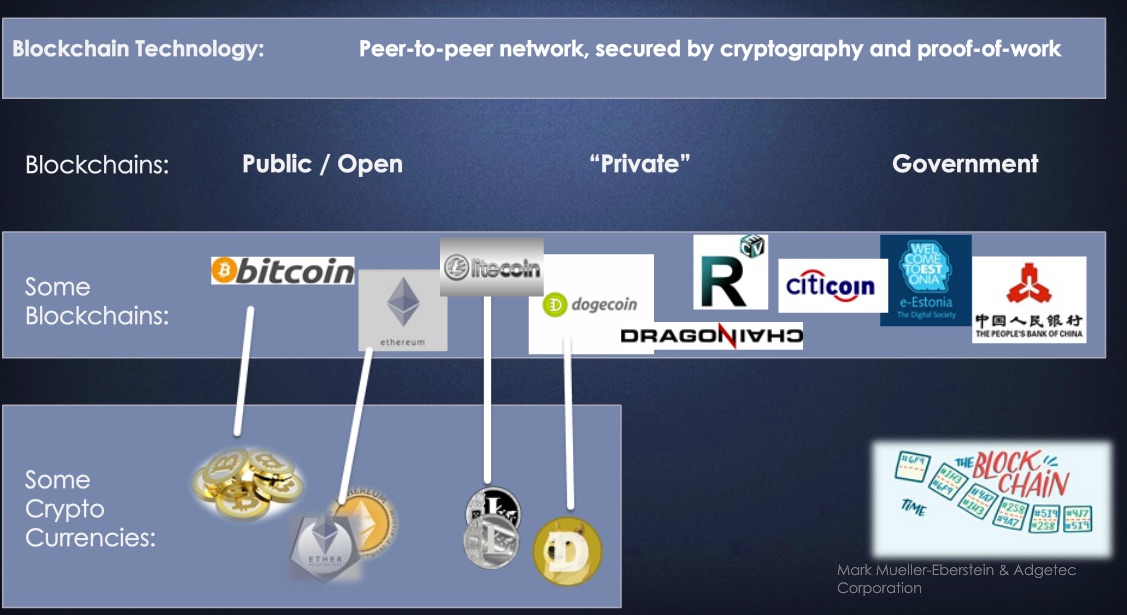
Since I have taken the initiative to this program and developed it with colleagues at the University of Oslo (where I have an adjunct position, this definitely made my day. Week, actually.

Just sayin’…

Notes from ACM Webinar on blockchain (etc.)

The Next Radical Internet Transformation: How Blockchain Technology is Transforming Business, Governments, Computing, and Security Models

Speaker: Mark Mueller-Eberstein, CEO & Founder at Adgetec Corporation, Professor at Rutgers University, Senior Research Fellow at QIIR

Moderator: Toufi Saliba, CEO, PrivacyShell and Chair of the ACM PB Conference Committee

Warning: These are notes taken live. Errors and omissions will occur. No responsibility whatsoever.

  • intro: old enough to remember the discussions in the early 90s about how the internet would change mail services – completely forgetting shopping, entertainment and others
  • Blockchain solves the problem of transferring value between Internet users without a third party
  • goes beyond the financial industry, can handle any kind of transaction
  • most of the world has access to a mobile phone, only about 20% has access to the banking system
  • Blockchain is the banking industry’s Uber movement
  • Blockchain much wider than Bitcoin, will facilitate new business models.
  • Blockchain transfers rather than copies digital assets, making sure there is only one instance of it.
    • settlement process: no clearing houses or central exchanges
    • peer-to-peer transfers, validation by network
  • Example: WeChat taking over payments in China, no link to banks
  • many commercial or government services are basically “databases” that are centrally managed, with one central point of failure
  • Blockchain allows a distributed ledger, information put in cannot be changed
    • Estonia thinking about a Blockchain in case of hacking or occupation
  • public (open), private and government blockchainsxx1
  • allows new services to existing customers, lots of inefficiencies up for grabs
    • estate records, voting, domain control, escrow, etc…
    • iPayYou allows use of Bitcoin
    • Walt Disney looking at Blockchain (DragonChain) for internal transfers, also use it for tracking supply chain to their cruise ships. Opensourced it.
  • 80% of Bitcoin mining done in China
  • regulation comes with a cost
  • Shenzhen want to be Blockchain Tech capital
  • 6-level security model, developed by William Mougayar (goes through it in detail: transaction, account, programming, distributed organizations, network (51% attacks, perhaps as low as 30%, smaller blockchains more vulnerable), governance)
  • Ethereum blockchain focusing on smart contracts: Hard forked in 2016, DAO issue where somebody hacked DAO code to siphon off money, hacking the program using the blockchain (not the blockchain),
  • credit card transaction can take up to 30 days, with disputes and everthing, Blockchain is almost instant
  • How “real” is blockchain technology
    • Goldman-Sachs invested $500m+
    • 15% of top global banks intend to roll out full-scale, commercial blockchain
    • etc.
  • what is holding it back?
    • difficult to use, understand, buy in; perception of risk and legality
    • difficult to see value for the individual
  • questions:
    • what are the incentives and adoption models?
      • different philosophies: computing power must be made available in the network: industrial mining vs. BitTorrent model, the amount of computing provided will be important, if we can find a model where just a little bit from every mobile phone is required
    • what are the hard costs of Blockchain?
      • you can google the costs. There are other approaches being developed, will post some links
    • can Blockchain be compromized by a virus?
      • theoretically, yes. Bitcoin is 10 years without, open source means verification (change is happening slowly because of code inspection)
      • comes back to incentive and governance model
  • and that was that…recording will be at webinar.acm.org in a few days.

Case teaching in Vienna

quantI have been asked to give a keynote speech at a conference on case teaching in Vienna, at the The University of Applied Sciences BFI. This is quite an honor, and I am very much looking forward to it.

Should you happen to want to be in Vienna and focus on case teaching on May 19 – well, I hope to see you there!